



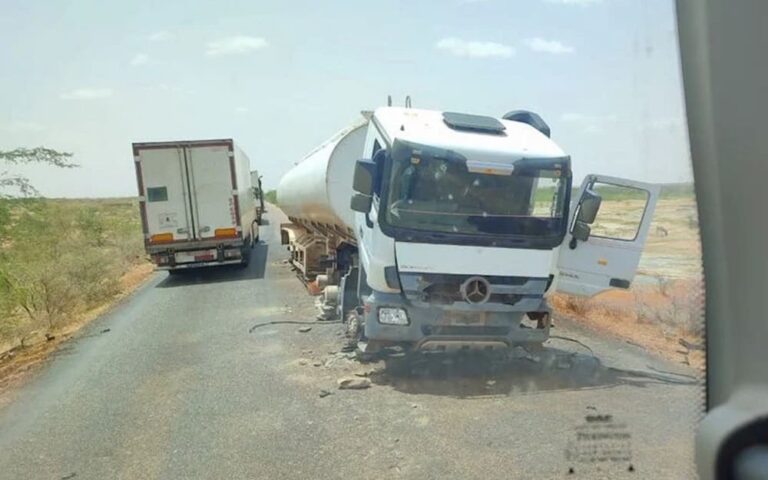
Meeting on Friday, October 3, 2025, under the chairmanship of Prime Minister Major General Abdoulaye Maïga, the Interministerial Committee for Crisis and Disaster Management (CIGCC) placed the country’s regular fuel supply at the heart of its discussions.
Mali imports more than 95 percent of its fuel estimated at around 1.3 million cubic metres, making the country highly dependent on external sources. However, this supply chain is currently weakened by repeated attacks by armed groups, particularly the JNIM, against tanker trucks on major highways.
At the same time, the General Directorate of Commerce, Consumer Affairs, and Competition closed several gas stations for non-compliance with price caps, set at around 725 CFA francs per liter of diesel and 775 CFA francs for premium gasoline.
This situation has repercussions on other key sectors. Approximately 55 percent of Mali’s electricity production comes from hydrocarbon-fueled thermal power plants. The slowdown in deliveries therefore increases the risk of prolonged power outages, particularly in urban centers.
Faced with these challenges, the government has initiated discussions with oil sector operators to adapt security measures, ensure the continuity of deliveries, and limit the economic repercussions. The issue now extends beyond fuel supply alone, as it affects the country’s energy stability and the resilience of its economy in a difficult security context.
MD/ac/Sf/fss/as/APA