





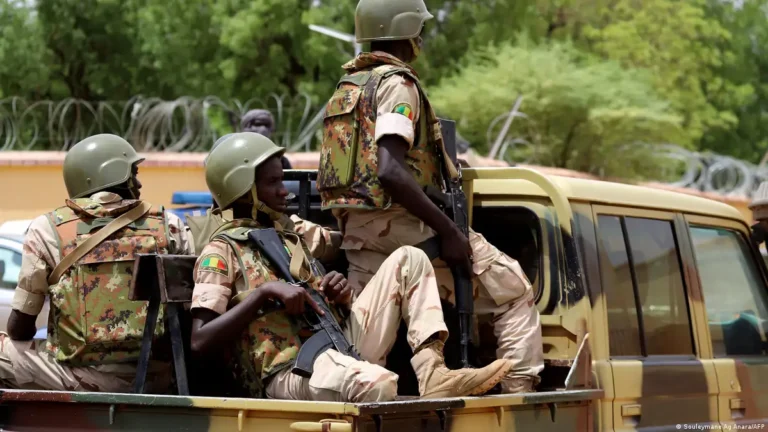
Amid a resurgence of armed attacks, the authorities in Mali have announced the creation of new military interest zones within several classified forests, nature reserves and protected areas across the country, which are considered potential hideouts for terror groups.
An interministerial decree signed in Bamako on 3 June 2026 places a number of forests and protected areas under enhanced military surveillance as part of Operation Dougoukoloko. The measure involves several government departments, including the ministries of Defence, Justice, Territorial Administration, Security, Transport and Environment.
The areas concerned include the forests of Faya, Soussan, Kékoro, Sorodian, Kangaba, Kéniébaoulé, Bossofala and Kobri, as well as the Boucle du Baoulé National Park. According to multiple sources, 35 military interest zones have been identified, mainly in central, southern and western Mali.
The authorities believe these areas may be used by terror groups as logistical bases, transit corridors or fallback positions. Under the new regulations, access to these zones is subject to prior authorisation issued by a local military authority operating under the Chief of Staff of the Armed Forces.
The decree also authorises the military command to conduct operations against any identified targets within the designated areas. Members of the armed and security forces, as well as customs and forestry officials, will be permitted access upon military instruction.
The new measure replaces a previous decree adopted on 29 December 2023 under Operation Maliko. It extends security oversight to a broader range of forested areas considered strategically important by the authorities.
The decision comes just over a month after the coordinated attacks of 25 April, which targeted several towns and strategic installations across the country, including Bamako, Kati, Gao, Sévaré, Mopti and Kidal. Claimed by the Group for the Support of Islam and Muslims (JNIM), affiliated with Al-Qaeda, as well as the Azawad Liberation Front, the attacks highlighted the capacity of armed groups to conduct simultaneous operations on multiple fronts.
Across the Sahel, forested regions and weakly governed areas have often served as refuges, logistical hubs and transit routes for armed groups. The new security framework is therefore intended to restrict their freedom of movement and prevent the establishment of rear bases in remote and difficult-to-access locations.
Beyond the security dimension, however, the measure raises environmental and socio-economic concerns.
The Boucle du Baoulé National Park forms part of a biosphere reserve recognised by UNESCO since 1982 and covers nearly 2.5 million hectares. The area also encompasses several nature reserves, ecological corridors and more than 300 recorded archaeological sites.
Access restrictions could affect the livelihoods of surrounding communities, particularly activities such as livestock grazing, firewood collection, gathering of natural products, small-scale farming and everyday travel. The move also highlights the need for coordination between defence forces, environmental agencies, administrative authorities, local communities and humanitarian organisations.
For Bamako, the establishment of these new military interest zones forms part of a broader strategy to strengthen territorial security following a series of attacks that exposed vulnerabilities at several strategic locations across the country.
The effectiveness of the initiative will now depend on its practical implementation, the sustained presence of security forces on the ground and the management of its impact on populations living near the areas placed under military control.
MD/te/Sf/lb/as/APA