





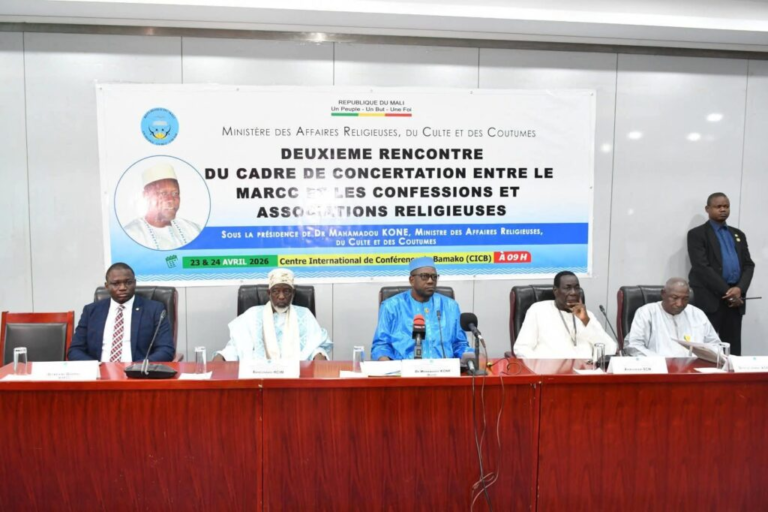
Public authorities and religious leaders in Mali convened in Bamako on April 23, 2026, to address the urgent need for preventing radicalization among talibé children.
Chaired by Minister of Religious Affairs Mahamadou Koné, this second session of the consultation framework aimed to institutionalize a structured dialogue between the state and various religious denominations to tackle social and security challenges. The discussions specifically focused on the persistent vulnerabilities faced by students in often informal Quranic schools, including poverty and a lack of educational oversight, which can increase their susceptibility to extremist influences.
To mitigate these risks, participants emphasized the importance of strengthening supervision and protection mechanisms through better coordination between religious institutions, social services, and the formal education system. A proposal for a nationwide census and mapping of Quranic schools was identified as a critical first step toward developing effective public policies. This initiative directly aligns with Mali’s 2018 national strategy for combating violent extremism, which prioritizes prevention and the reinforcement of social cohesion as foundational pillars for national stability.
Recognizing the influence of religious actors in a country facing ongoing security threats from armed groups, the Malian authorities are increasingly relying on these leaders to act as agents of mediation and moderation. The meeting sought to generate consensus-based recommendations that can be implemented locally to build community resilience. By fostering a shared approach to managing the confessional space and religious discourse, the government hopes to strengthen the social fabric and provide a more secure environment for the nation’s youth.
MD/te/lb/abj/APA