





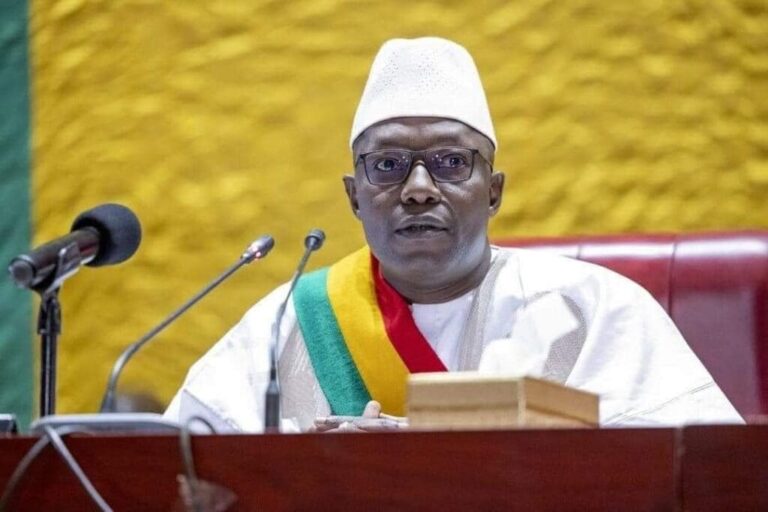
Mali’s National Transitional Council (CNT) recently adopted the first part of the 2026 draft budget, which features an increase in both revenue and expenditure.
Despite a still fragile economic context, the authorities are projecting a deficit lower than previous years, signaling a concerted effort toward budget control.
The 2026 draft budget forecasts 3,057.79 billion CFA francs in revenue against 3,578.22 billion CFA francs in expenditure. This results in an expected deficit of 520.4 billion CFA francs. This figure is lower than the deficit estimates for 2025 (approximately 539 billion CFA francs) and the 598 billion CFA francs recorded in 2024.
The budget reflects a strengthening of domestic resource mobilization, which the government cites as a major financial policy focus. Revenue is estimated to increase by over 11 percent compared to the previous year, while expenditure is projected to rise by just over 9 percent.
The CNT has so far only approved the general framework of the budget. Sectoral priorities will be detailed in the second part of the finance law, which is still under review.
The authorities maintain that the desired balance is contingent on increasing tax and customs revenues. This effort comes despite persistent challenges, notably security constraints and the lingering effects of the fuel shortage that began in mid-September, which slowed economic activity and increased logistical costs.
The budget trajectory for 2026 continues an upward trend seen in previous years: Revenues have grown from 2,130 billion in 2024, to 2,739 billion in 2025, and now surpass 3 trillion in the current draft. Spending has similarly increased from 2,728 billion in 2024 to 3,578 billion in 2026. Despite this growth, the government insists it is on track to reduce the deficit to a level consistent with regional fiscal discipline requirements.
Mali’s macroeconomic outlook remains dependent on several variables, including the evolving security situation, the effectiveness of domestic revenue collection, and the implementation of announced public investments. The final vote on the second part of the budget is highly anticipated to clarify specific choices for priority sectors like social services, security, and infrastructure.
MD/ac/Sf/fss/abj/APA