



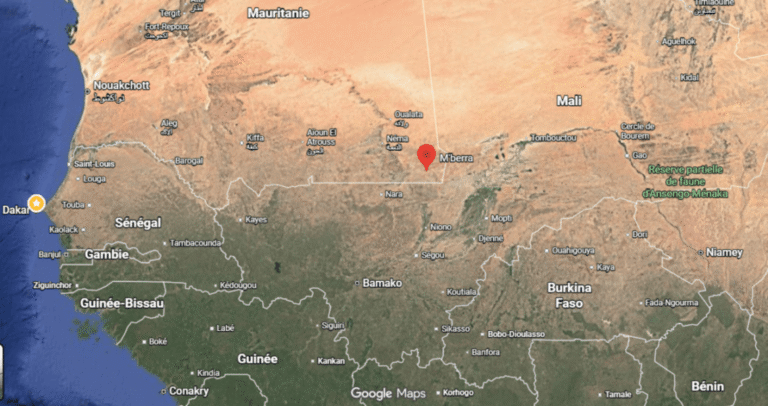
The Mauritanian government has issued a sharp rebuttal to recent claims made by the Malian Armed Forces (FAMa), labeling accusations that two Malian soldiers escaped from a Mauritanian refugee camp as “unfounded” and “deeply offensive.”
The controversy began on Sunday when the Malian General Staff announced that two soldiers, Private First Class Mohamed Wangaraba and Private First Class Mahamed El Maouloud Diallo—who had been abducted in October 2025—managed to escape from a refugee camp in Mauritania on the night of March 13–14. The Malian military statement claimed this escape occurred during operations in the Wagadou border forest and noted the subsequent recovery of the soldiers in Goundam. The announcement also referenced the separate escape of Alidji Bagna, the Prefect of Dioila, who had been kidnapped in February 2026 and allegedly escaped his captors in the Macina area before being secured by FAMa.
In response, Mauritania’s Ministry of Foreign Affairs expressed “astonishment and indignation” at the suggestion that a refugee camp on its soil could be used by terrorist groups to hold hostages. Nouakchott rejected these claims in the strongest possible terms, emphasizing that the M’Berra camp has operated for nearly three decades under the supervision of the United Nations High Commissioner for Refugees (UNHCR) and international humanitarian organizations. Mauritanian officials stressed that the facility is subject to constant monitoring and remains accessible to international humanitarian actors, suggesting that the Malian military’s public accusation—which was made without prior diplomatic consultation—is a serious misrepresentation of the site’s nature.
Mauritania’s government has called for greater rigor in official communications from Bamako, urging Malian authorities to utilize direct diplomatic channels rather than making public allegations that could further escalate regional instability. While expressing disappointment, Nouakchott reaffirmed its commitment to good-neighborly relations and expressed a clear preference for dialogue. However, the Mauritanian statement also included a firm warning, noting that the country reserves the right to take necessary measures to defend its sovereignty and public image.
This flare-up occurs against a backdrop of already fragile relations between the two Sahelian neighbors. Recent tensions have been fueled by disagreements regarding the expulsion of Malian migrants from Mauritania and the administrative closure of Mauritanian-owned businesses in Mali. Although Malian Transitional President Assimi Goita and Mauritanian officials have previously attempted to ease these frictions through high-level visits and the proposed reactivation of a joint bilateral commission, this latest diplomatic row highlights the continued difficulty in maintaining regional cohesion amidst the ongoing security crisis in the Sahel.
AC/fss/abj/APA