



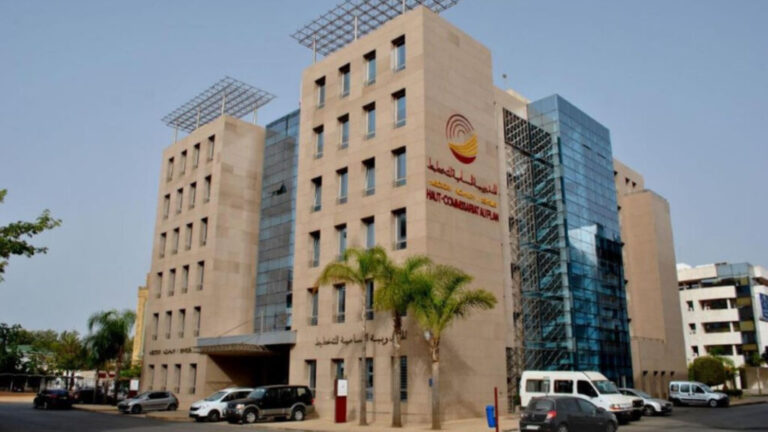
Data released by the High Commission for Planning (HCP) on Tuesday, February 3, 2026, reveals that the Moroccan economy generated a net total of 193,000 jobs between 2024 and 2025.
This overall growth was driven by a robust performance in urban centers, which added 203,000 positions, effectively neutralizing the loss of 10,000 jobs in rural areas.
A significant trend highlighted in the latest report is the transition toward formal, paid labor. The HCP note specifies that paid employment surged by 249,000 positions, while unpaid employment—often linked to informal family businesses or subsistence agriculture—contracted by 55,000. This shift indicates a strengthening of the formal labor market despite the broader economic fluctuations observed in the region.
While job numbers grew, the national activity rate remained stable at 43.5%. However, a divergence appeared based on geography, as the rate increased to 42.2% in cities while slipping slightly to 46.1% in the countryside. Demographic trends remained largely stagnant across gender lines, with male activity holding at 68.5% and female participation remaining virtually unchanged at 19%. Similarly, the national employment rate saw a marginal increase from 37.7% to 37.8%. Interestingly, while the employment rate for men rose to 61.1%, it edged downward for women to 15.1%, highlighting a persistent gender gap in workforce engagement.
The Moroccan labor force remains highly concentrated within a few key economic hubs. Five regions currently account for 72.3% of the working-age population aged 15 and older. Casablanca-Settat leads the country with 22.6%, followed by Rabat-Salé-Kénitra at 13.4%, Marrakech-Safi at 12.9%, Fez-Meknès at 11.9%, and Tangier-Tetouan-Al Hoceima at 11.6%. This geographic concentration underscores the vital role these industrial and administrative corridors play in driving the nation’s employment recovery.
AK/Sf/fss/abj/APA