





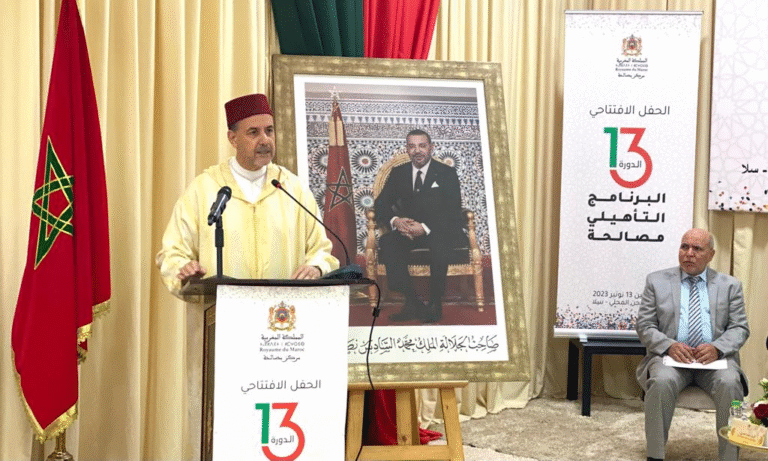
For more than two decades, Morocco under the leadership of King Mohammed VI, has been implementing an ambitious cultural and educational strategy to immunise society against extremism.
Based on the promotion of values, education, and a balanced religiosity, this approach has now established itself as a benchmark model in the Muslim world.
In an interview with the Italian media outlet Ius101, the Secretary General of the League of Ulemas of King Mohammed VI, Ahmed Abbadi, emphasised that this national policy aims to build a resilient society, capable of clearly distinguishing good from evil and rejecting the illusions propagated by extremists.
Instead of relying on rigid and restrictive rules, Morocco advocates a thoughtful and flexible religiosity, adapted to the country’s social and cultural diversity.
The heart of this strategy lies in education. Families, schools, local communities, and the media are involved in this fundamental work, particularly through the use of innovative educational tools.
Educational games, for example, are used to instill positive values from childhood, thus helping to develop lasting social and ethical reflexes. “Learning through play facilitates the internalization of moral principles without constraint,” Abbadi explained.
The official recalled that this approach is the result of a profound reflection on the role of religion in modern society. The Quran is thus presented not as a set of rigid prohibitions, but as a guide to life that allows one to overcome difficulties and face the realities of everyday living. This inclusive vision adapts to the specificities of
each social and cultural group in the country, strengthening the sense of belonging and national cohesion.
An essential component of the program also concerns the training of imams and religious leaders. The Mohammed VI Institute for the Training of Imams, Morchidines, and Morchidates, located in Rabat, is a showcase of this policy. It welcomes Moroccan and foreign students every year, strengthening the international influence of the Moroccan model of a peaceful, tolerant, and open Islam.
“For more than twenty years, under the wise leadership of His Majesty King Mohammed VI, rigorous and consistent work has been carried out. The Moroccan model proves that it is possible to build a society protected from extremism through education and culture,” Abbadi concluded, trusting that this model could inspire other countries facing the same challenges.
MK/ac/fss/as/APA