



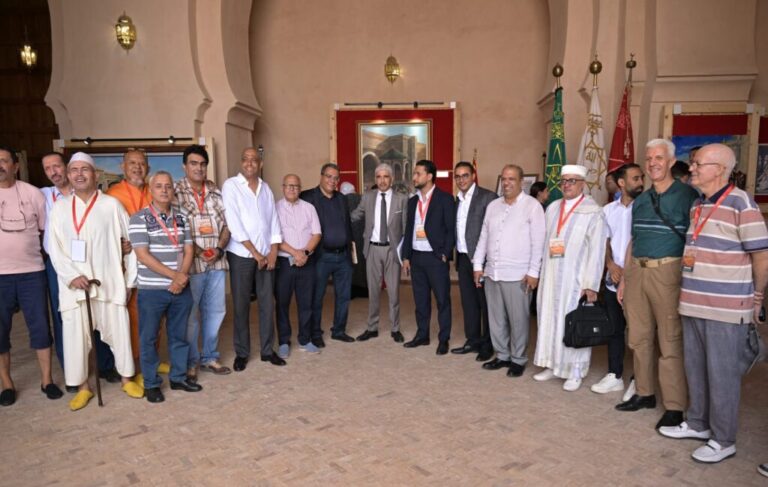
An international symposium hosted in Meknes on Friday explored the historical and strategic contributions of Moroccan Sufism to the defense of major national priorities, with a primary focus on the Western Sahara issue.
Held at the iconic Bab Mansour Gallery on July 24 as part of the 6th edition of the Aissawa Festival: Maqamates and Rhythms of the World, the event brought together political scientists, geostrategic analysts, and media researchers under the theme “Sufism and Major National Issues: The Question of the Moroccan Sahara as a Model for Reflection.”
Adopting an interactive televised debate format moderated by public broadcaster Al Aoula presenter Mohamed Reda El Abidi, the symposium featured discussions among prominent academics, including international law specialist Mohamed Manar Slimi, geostrategic expert Said Khomssi, political scientist Abdelfattah Belamchi, and communication researcher Karim Hadri. Panellists examined how Morocco’s unique religious architecture—combining Sufi spiritual traditions with institutional stability—serves as both a foundation for national identity and an effective instrument of soft-power diplomacy across Africa, where Moroccan spiritual brotherhoods maintain deep historical ties.
Beyond its role in foreign relations, speakers emphasized that Sufism offers a broader societal framework that fosters personal development, social cohesion, civic responsibility, and values of moderation and tolerance. Organizers of the Aissawa Festival reaffirmed their ambition to establish the annual symposium as a premier global forum for dialogue on contemporary religious, cultural, and geostrategic issues.
MK/Sf/fss/abj/APA