





Morocco has established a centralised fatwa system, overseen by the Supreme Council of Ulemas, to ensure Sharia compliance in financial products.
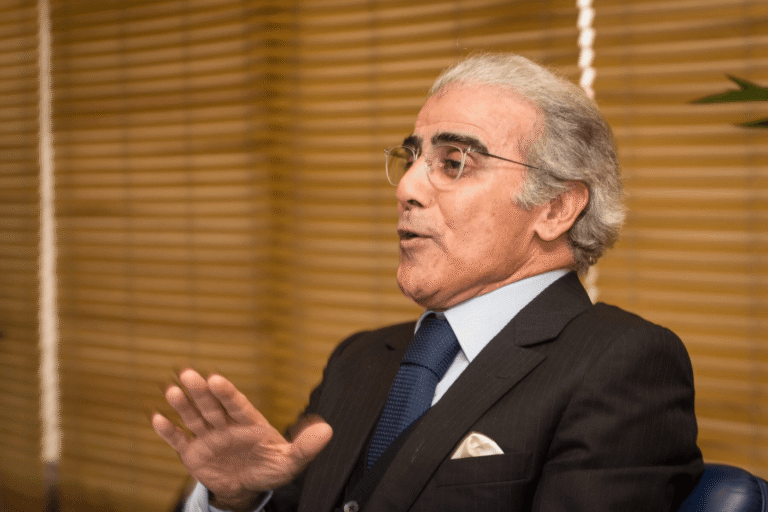
Speaking at the 23rd Islamic Financial Stability Forum held in Rabat, Bank Al-Maghrib Governor Abdellatif Jouahri, stressed the urgent need for collective action to address the structural vulnerabilities of the Islamic finance sector and support its growing global prominence.
“The sustainable development of Islamic finance depends on stronger international cooperation,” Jouahri stated during the three-day event, co-hosted by the Islamic Financial Services Board (IFSB).
Addressing an audience of central bank officials, regulators, and representatives from multilateral institutions, he emphasized that “integrating Islamic finance into the global financial system requires harmonization that respects national specificities.”
According to Jouahri, Islamic finance faces four major challenges in a rapidly evolving financial landscape: adherence to Sharia principles, efficient liquidity management, sustainable funding sources, and risks
stemming from digitalization.
He called for “a strengthened cooperative framework” based on global standards yet flexible enough to accommodate diverse legal, economic, and cultural contexts.
Since 2015, Morocco has pursued a pragmatic path to developing its participatory finance sector. Bank Al-Maghrib, working closely with the Supreme Council of Ulemas, has implemented a centralized fatwa mechanism to certify the Sharia compliance of financial products.
As a result, participatory finance now accounts for 2% of Morocco’s banking assets, within a structured institutional and fiscal framework supported by a clear national roadmap.
Jouahri commended the IFSB’s pivotal role since its inception in 2003, notably in setting standards, fostering dialogue among regulators, and providing technical assistance.
The Rabat forum continues this momentum, offering a platform to share best practices, discuss ongoing reforms, and identify tools to bolster the sector’s resilience to future shocks.
The IFSB’s annual meetings, hosted with the support of Bank Al-Maghrib, brought together more than 130 high-level participants.
The highlights included the 46th IFSB Council Meeting, the 23rd General Assembly, and the Islamic Financial Stability Forum. Through this engagement, Morocco reaffirms its commitment to building a resilient, structured, and globally integrated Islamic finance ecosystem.
MK/te/lb/gik/APA