



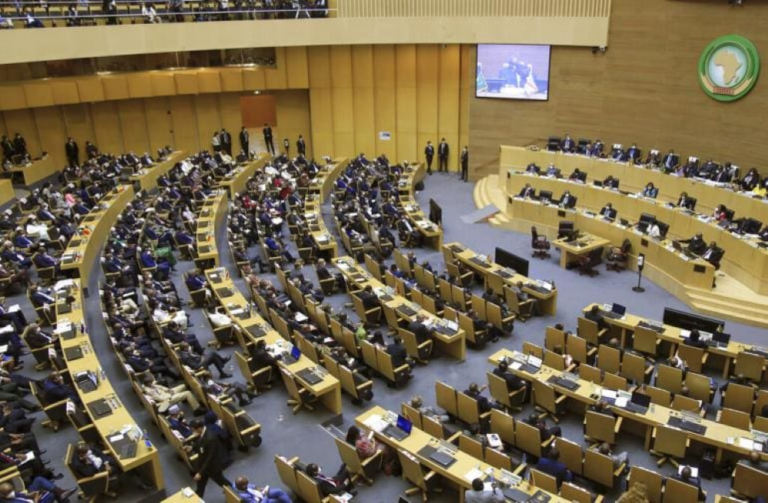
Morocco continues to strengthen its standing within the institutional architecture of the African Union (AU), following regional consultations held for North Africa.
The kingdom reinforced its influence by securing several high-level responsibilities within strategic organs and bodies of the African Union (AU), according to Moroccan diplomatic sources.
These new appointments confirm the kingdom’s growing role within continental organisations.
They also underscored Morocco’s steadfast commitment to the AU’s major strategic priorities, including institutional reform, governance, organisational funding, economic integration, and the oversight of key challenges facing the continent.
By securing nine top-level leadership positions, Morocco took first place in the allocation of posts negotiated for the North Africa region.
The kingdom will assume the vice-presidency of the Ministerial Committee on African Candidatures within the International System. Additionally, it will serve as vice-chair of the Bureau on Scale of Assessment and Contributions of AU member states.
Furthermore, Morocco will sit on the Specialised Technical Committee on Justice and Legal Affairs, as well as the Specialised Technical Committee on Economic Development, Tourism, Trade, Industry, and Mining—two key technical committees central to shaping continental policy.
Within the subcommittees of the Permanent Representatives Committee (PRC), the kingdom will secure the vice-presidency of the Bureau of the Subcommittee on Institutional Reforms and the chair of the Subcommittee on Environmental Issues, both of which are structural pillars within the continental body.
Morocco will also serve as a member of the Subcommittee on Human Rights, Democracy, and Governance.
In addition, the kingdom has been appointed to the Board of Directors of the African Migration Centre, with Moroccan experts set to actively contribute to the body’s operations.
According to Rabat, this enhanced institutional presence cements Morocco’s leading role in African migration governance. It reflects the recognition by its African peers of the vision of King Mohammed VI, the AU leader on migration issues, who champions a supportive, humanistic African approach based on shared responsibility.
Morocco’s diplomatic sources concluded that these nine key leadership positions reflect the widespread trust placed in the kingdom and bear witness to its continuous contribution to the work of the African Union.
AK/Sf/lb/as/APA