





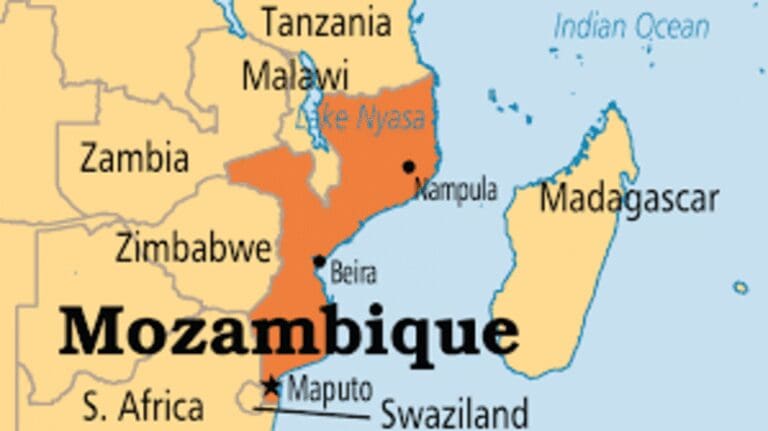
Mozambique and China have signed agreements to implement the planned Moamba Industrial Park and the Moamba Special Economic Zone, a major step towards establishing one of the country’s most ambitious industrial and investment corridors.
The deals were concluded during the Mozambique–China Business Forum in Changsha, held alongside President Daniel Chapo’s first official visit to China.
The Moamba Industrial Park and Special Economic Zone are central to Mozambique’s strategy to boost industrialisation, expand national production and create jobs under the government’s 2025–2029 Five‑Year Programme.
The projects are designed to attract large‑scale private investment, strengthen manufacturing capacity and develop new value chains in agriculture, pharmaceuticals, energy and services.
The agreements involve MZ Holding Co., the Maputo provincial government and several Chinese companies, including Hunan Er‑Kang Pharmaceutical Group.
Planned investments include advanced AI‑enabled management systems for the industrial park, a poultry value chain capable of producing 1.2 million chickens per month, a pharmaceutical manufacturing hub, a coal‑to‑gas power plant of up to 1,000 MW and the creation of a Moamba Health City.
The package also includes the Maputo Agri‑Parks project, initially covering 50,000 hectares for maize, soybean and lettuce production, as well as a vocational training centre to equip young people and adults with skills needed for future industries in the SEZ.
Chinese investor delegations are expected in Maputo on 26 April to begin preparatory work.
The health component of the agreements includes plans for a hospital city with advanced medical technology, accommodation facilities, a health school, a medical‑pharmaceutical research centre and a telemedicine platform linking Mozambican and Chinese specialists.
Officials say the project could offer a regional alternative to medical travel to India, Europe and Turkey.
Mozambique’s government has framed the Moamba developments as part of a new phase in its cooperation with China, shifting from state‑driven infrastructure financing toward private investment and business partnerships.
The projects are expected to anchor long‑term industrial growth and position Moamba as a strategic economic hub for southern Mozambique.
JN/APA