



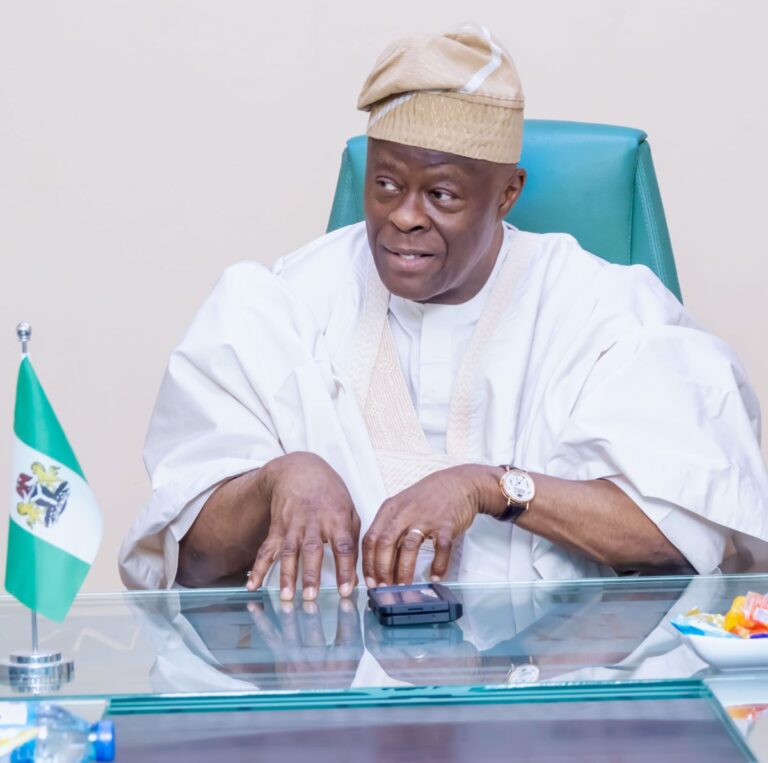
Nigeria’s Minister of Finance and Coordinating Minister of the Economy, Mr. Wale Edun, has assured Nigerians that the Federal Government will maintain open consultation with business leaders and stakeholders ahead of the implementation of the new Tax Acts in 2026.
Speaking at the first edition of the Government-Private Sector Dialogue Series: South East Finance and SMEs Growth Roundtable, Edun said that the Tinubu administration was committed to reforms that would make Nigeria’s fiscal environment more transparent, efficient, and fair to all participants.
Edun disclosed that the new tax laws had been finalised and would take effect from January 1, 2026.
According to him, the Tax Acts are the result of collaboration among the executive, legislature, judiciary, professionals, and the general public.
“The dialogue that you ask for, I can assure you, will play a big role,” he said. “There needs to be dialogue. There must be dialogue. Even the feedback we are hearing here today shows the need for more explanation and clarification. And when it comes to major reform, it’s all about timing, sequencing, and consultation,” he said.
He explained that the government’s economic reforms are already yielding results, noting improvements in the foreign exchange market and petroleum pricing systems.
“You know what it was. You know what it is. Now, we have more of a level playing field, more of a willing buyer, willing seller market, market pricing of petroleum products, and market pricing of foreign exchange,” he said. “This relieves you of what you had to do before to import.”
He noted that the objective of the new framework is to make Nigeria’s tax system fairer, clearer, and more efficient, while widening the tax net and reducing multiple payment points.
“The aim is to make the system fairer, to make it clearer, to make it more efficient, and of course to spread the net as wide as possible so that everybody gets a chance to contribute accordingly,” the Punch newspaper quoted Edun as saying.
The minister added that the government was also working on a National Single Window Project to improve trade facilitation. The initiative, he noted, would be launched in the first quarter of next year and would employ automation, digitisation, and artificial intelligence to simplify trade processes.
“The idea is to use automation, digitisation, and artificial intelligence to improve the processes and speed them up,” he said.
He assured the business leaders that the dialogue on tax reform and trade facilitation would continue, and that many stakeholders had already called for the reforms to be sustained and strengthened.
“This is an ongoing dialogue. There have been participants here who want to see this effort sustained, continued, and even built upon. I congratulate you, and you have our support anytime, any day, he added.
GIK/APA