



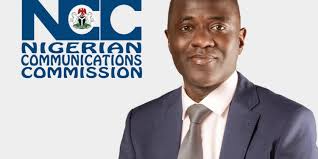
The Executive Vice Chairman of the Nigerian Communication Commission (NCC), Dr Aminu Maida, is excited that reverting to market-driven pricing in the industry has attracted about $1 billion new telecoms infrastructure investments in Nigeria in 2025.
Speaking in an interactive session with journalists in Lagos, Dr Maida noted that the decision has restored investors’ confidence and reversed years of under investment that witnessed the slow network expansion and service quality improvement.
He said that as at June 2025, operators were already receiving new equipment ordered and that upgrades and new site construction underway, noting that the fresh investments will boost capacity, improve service quality and strengthen Nigeria’s competitiveness in the global telecom space.
According to Maida, the move has made one operator, who has not invested a single Kobo on network upgrade over the last three years, to start doing something in that direction.
He explained that when the NCC issued licences for the provision of services on the fifth generation (5G) technology, MTN Nigeria, Airtel Nigeria and Mafab Communications, all underestimated the huge challenges in the industry when they promised nationwide rollout of the services.
Local media reports quoted the NCC boss as saying that the Mobile Network Operators (MNOs) that got the licences “over-promised” to deliver services to their consumers, without minding challenges in the industry.
He said that the 50 per cent tariff hike for end users of telecom services approved by the NCC to MNOs earlier in the year has started changing the dynamics by stopping the drought in both local and foreign direct investments (FID).
While highlighting why the increase in tariff has failed to translate to improved service quality, Maida explained that such equipment are not what can easily be purchased on the shelf and that some of the equipment are yet to be built by the original equipment manufacturers.
According to him, bringing the equipment into the country will require a process and that the “MNOs would need to book, pay, ship, pay for clearing at the ports, transport to sites, install and commission before customers would start feeling the impact.”
Maida, however, admitted that installing the equipment nationwide will take some time and the installation process, which has already commenced in the North Central zone and Abuja, will soon be extended to other areas gradually.
He disclosed that since the rollout of the technology in Nigeria less than 2000 5G sites have been built across the country, a situation he blamed on a combination of factors, including foreign exchange (forex) issue and difficulty securing land for new cell sites.
On infrastructure protection, he said the NCC was working with the Office of the National Security Adviser (NSA) to design region-specific rapid response frameworks, blending community engagement with civil defence presence to tackle threats such as generator theft, poor security, and local disputes.
Addressing the issue of low local content in the Telecoms industry, Maida stated that only three countries are responsible for the supply of low level software and hardware used and these are China that has Huawei and ZTE; Finland with Nokia and Sweden with Ericsson.
GIK/APA