





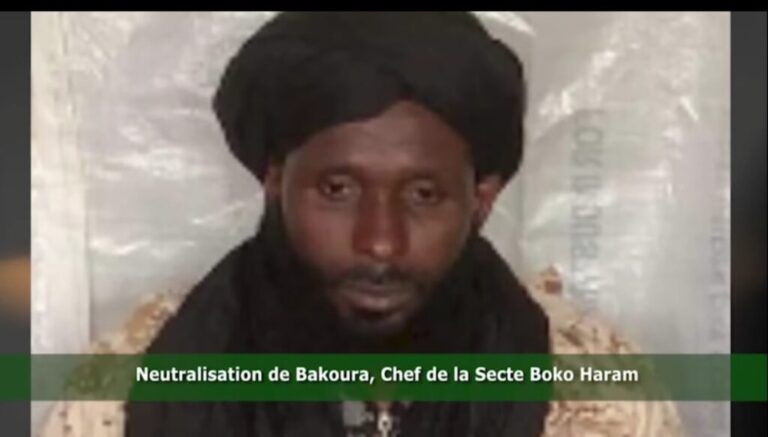
The Nigerien Armed Forces (FAN) claim to have neutralized Ibrahim Mahamadou, also known as “Bakoura,” the leader of the JAS faction of Boko Haram.
The operation, a targeted air strike in the Diffa region on August 15, awaits official confirmation of Bakoura’s death.
According to a Thursday announcement from FAN headquarters, the operation took place on the island of Chilawa after “several weeks of careful surveillance.” A reconnaissance aircraft first confirmed the targets’ positions before a fighter-bomber carried out “three successive and precise strikes” on the morning of August 15.
A decade-long jihadist career
Bakoura, in his forties, reportedly joined Boko Haram more than ten years ago. A former lieutenant to Abubakar Shekau, he took control of the Jama’atu Ahlis Sunna Lidda’Awati Wal-Jihad (JAS) faction following Shekau’s suicide in May 2021. Under Bakoura’s leadership, JAS intensified attacks in the Lake Chad Basin. A recent UN report identified his faction as the most active within Boko Haram, expanding its control around the Komadougou Yobe River in northern Borno State.
Caution on confirmation
Vincent Foucher, a leading expert on the Nigerian insurgency, urges caution regarding the announcement. He points out that “the deaths of many jihadist leaders in the Lake Chad region have been announced prematurely” in the past, citing the case of Shekau, who was mistakenly declared dead multiple times. To date, the JAS faction has not issued any official statement on the announced fate of its leader.
Foucher’s analysis suggests Bakoura was a pivotal figure for JAS, having successfully restructured the faction after Shekau’s death. Under his command, the group regained ground, relaunched its offensive against ISWAP, and expanded its activities.
Uncertainties about JAS’s future
The potential consequences of Bakoura’s death are difficult to predict. Foucher notes that Bakoura’s leadership was often imposed through violence, leading to more pronounced internal tensions within JAS compared to ISWAP.
The geographical dispersion of the group’s affiliates raises questions about who could emerge as a successor recognized by all factions. While the organization maintains a solid economic base through control of territories and taxes on fishing, the loss of Bakoura risks causing significant structural changes. The future of the security situation will largely depend on the ability of the various factions to maintain internal cohesion and the effectiveness of the multinational forces fighting terrorism.
AC/fss/abj/APA