





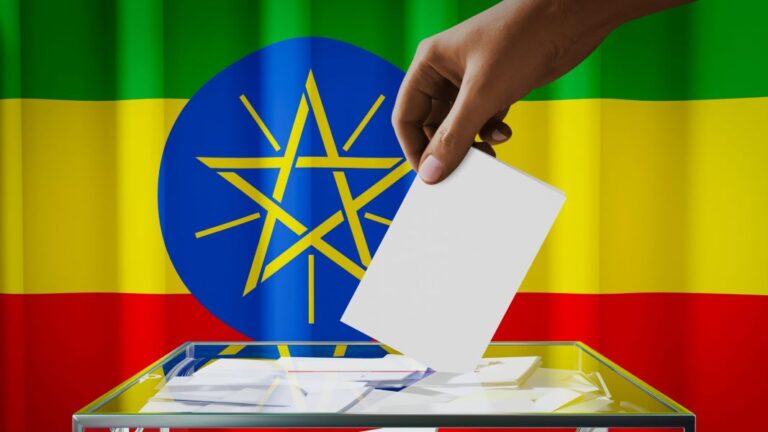
Ethiopians on Monday vote in general elections despite the exclusion of Tigray, a significant portion of Amhara and Oromia regions where people are not taking part due to insecurity.
Polling began as early as 6am local time in Addis Ababa and other parts of the country not disrupted by conflict.
It is the seventh national exercise since the country reverted to democracy in 1991 with prime minister Abiy Ahmed’s Prosperity Party expected to maintain political control.
However, millions of people in Amhara, Tigray and Oromia cannot take part as instability rocks those restive regions where rebels seem to wield some power.
Over the weekend, the Amhara Fano National Movement (AFNM), which has been fighting the federa; government since 2023, announced restricting the movement of vehicles across Amhara in a move many said is aimed at disrupting the election in the region where more than 30 million people live.
The AFNM in a statement said that no vehicles, except ambulances and emergency service providers, can travel within the region from Friday, May 29 to June 2, 2026. The group also warned that measures would be taken against individuals or entities violating the directive.
Similarly, the Oromo Liberation Army (OLA), which has been in conflict with federal forces for five years, also announced a region-wide ban on transportation and movement ahead of the vote until June2, 2026.
The whole northern region of Tigray, which has been trying to recover from a brutal civil war that ended in 2022, has been totally excluded from the poll.
Political experts claim that for millions of citizens, the vote feels less like a genuine democratic exercise and more like a symbolic ritual designed to consolidate the mandate of the ruling Prosperity Party.
Major opposition groups said they face a suffocating environment rife with bureaucratic red tape, media restrictions, and targeted harassment. Many have been pushed to the fringes, leaving voters with the distinct impression that the outcome is predetermined.
Under Abiy’s watch the government went to war in 2020 with Tigray’s leaders in a two-year conflict estimated by the African Union’s mediator to have killed some 600,000 people and which drove the region to the precipice of famine.
According to Reporters Without Borders’ 2025 press freedom index, Ethiopia came 148 out of 180 countries.
Former Kenyan President Uhuru Kenyatta is in Addis Ababa to lead the African Union Election Observation Mission during the election.
Speaking to journalists in the Ethiopian capital, Kenyatta emphasised the importance of the election and expressed confidence in Ethiopia’s democratic journey.
“Our wish is for Ethiopia to develop its strength and continue being a role model for our continent,” Kenyatta said, adding that the successful conduct of the election would represent a major victory for Africa’s democratic aspirations.
In a move aimed at strengthening transparency, 55 domestic civil society organisations have been accredited to observe the elections alongside a 59-member observer mission from the African Union and a 26-member mission from the Intergovernmental Authority on Development.
The European Union has declined to observe the elections for undisclosed reasons.
MG/as/APA