





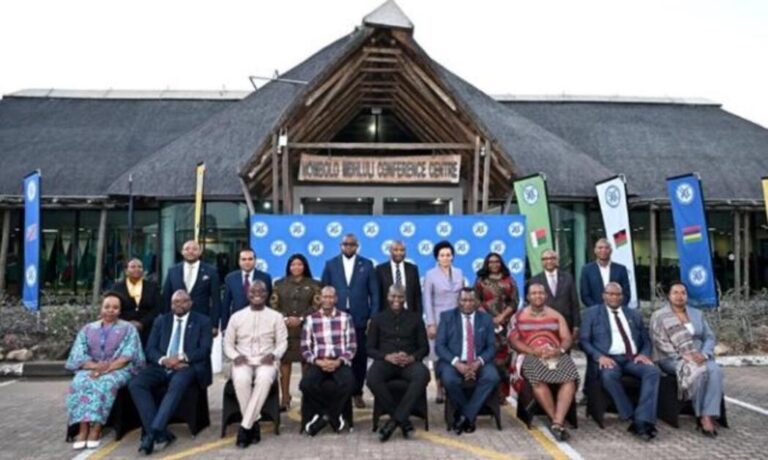
Southern African Development Community (SADC) foreign ministers have agreed to pursue a coordinated regional response to strengthen economic resilience and protect member states from escalating geopolitical and economic disruptions.
The commitment was made during a ministerial retreat held from 22-24 May in South Africa, which was aimed at assessing the fallout of a rapidly shifting global environment.
The Ministers of Foreign Affairs Retreat was convened after a March 2026 decision by the SADC Council of Ministers.
The ministers expressed concern at how intensifying geopolitical tensions are reshaping access to markets and raising costs across key sectors, including trade, energy and food security, with spillovers into financial systems.
Delivering the retreat’s outcome statement on Sunday, South Africa’s International Relations and Cooperation Minister Ronald Lamola said ministers identified growing risks associated with global instability.
“Ministers underscored the impact of intensifying geopolitical rivalry, including the current Middle East conflict, climate-related pressures, and disruptions to global trade, energy, tourism, and financial systems, and noted that these factors are driving higher food and fuel prices, exchange-rate volatility, and increasing risks to food and energy security across Member States,” the statement read.
The ministers noted that these dynamics are contributing to higher food and fuel prices, exchange-rate volatility and rising risks to food and energy security across SADC member states.
They said the region’s response should, therefore, be anchored in coordinated action to strengthen regional integration and improve policy coherence as member states face external shocks.
The ministers also committed to strengthening regional institutions and coordinating diplomacy to help SADC speak with greater unity in global engagements.
Discussions at the retreat focused on priority areas such as financing for regional integration, investment and public debt management; industrialisation, value chains and trade; infrastructure, transport and logistics; free movement of people, goods and services; agriculture and food security; and energy – particularly oil and gas.
The ministers agreed that the retreat’s outcomes should function as a practical roadmap to advance implementation, accountability and coordination across the five thematic areas.
JN/APA