



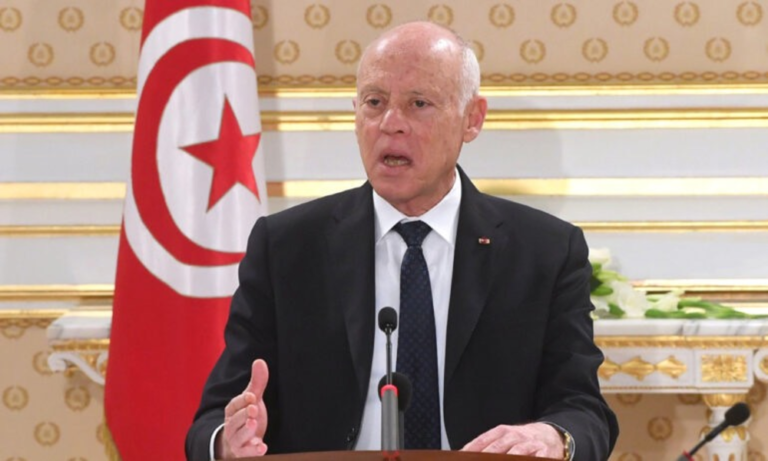
President Kais Saied has issued a call for immediate anticipation, coordination, and intervention following recent severe weather that exposed persistent structural dysfunctions in Tunisia’s public sector.
With each new climate crisis, the nation faces recurring shortcomings, including degraded infrastructure, a lack of operational foresight, and diluted administrative responsibilities. The recent floods, which saw vehicles swept away and entire neighborhoods submerged, have highlighted a significant gap between official government pronouncements and the difficult reality faced by citizens on the ground.
During a high-level meeting at the Carthage Palace on January 23, 2026, President Saied addressed the head of government and key ministers, emphasizing that the state must move away from reactive measures toward a rigorous policy of prevention. He specifically pointed to a documented lack of coordination between the Ministry of Equipment, the National Sanitation Office, and local municipalities as a primary obstacle to effective crisis management. The President’s recent visits to disaster-stricken areas like Rades, Nabeul, and Hammamet served to offer condolences and directives, yet the visits also underscored deeper systemic issues such as clogged sanitation networks and the urgent need for dredging wadis.
The discussions also touched upon the role of citizen and corporate responsibility, particularly regarding the illegal obstruction of drainage networks. While the President praised the outpouring of solidarity among volunteers and security forces, he noted that such resilience cannot permanently replace the need for structured and accountable public action. The presidency’s current focus remains on closing the divide between failing local institutions and the urgent needs of the population, ensuring that future urban planning and maintenance programs are robust enough to withstand the increasing frequency of extreme weather events.
MK/AK/fss/abj/APA