



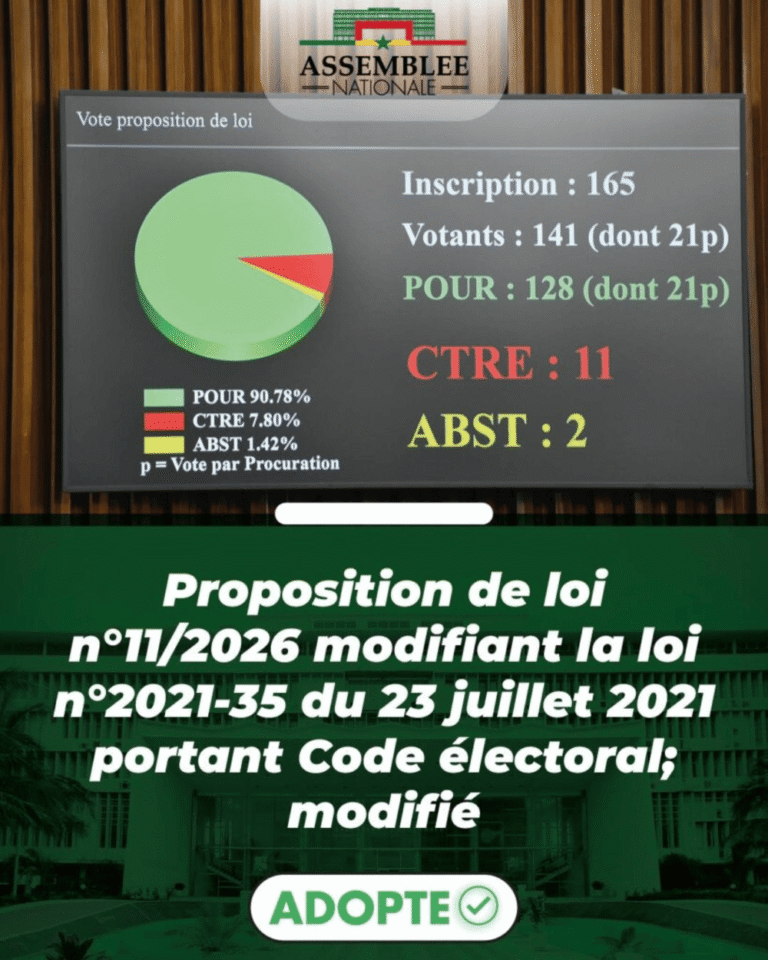
Senegal’s National Assembly has officially adopted a revised Electoral Code that introduces significant changes to the nation’s eligibility requirements for political candidates.
Passed on Tuesday with a decisive 128 votes in favor, the reform moves away from the previous legal framework, which many considered overly restrictive. Under the newly approved rules, criminal convictions will no longer result in automatic disqualification, particularly in instances where legal rulings are not yet final or involve offenses classified as minor. This adjustment represents a notable shift in the legal landscape and could have immediate consequences for the country’s upcoming elections.
In addition to revising candidate requirements, the reform addresses the broader electoral base by simplifying voter registration procedures. These changes are designed to streamline enrollment and allow for the reinstatement of citizens who had previously been removed from the voter rolls. Government authorities maintain that these adjustments, along with the harmonization of various electoral procedures, are intended to minimize legal disputes and increase overall transparency during the candidate submission and validation phases.
While proponents of the reform frame the overhaul as a necessary step toward modernizing the democratic system and fostering more inclusive political participation, the move has drawn scrutiny from some opposition circles. Critics argue that the timing and nature of the changes are politically consequential, as they potentially pave the way for previously excluded figures to re-enter the electoral arena. Set against a backdrop of a heightened political climate, the impact of this new code is expected to be a defining factor in Senegal’s next round of democratic contests.
TE/lb/abj/APA