



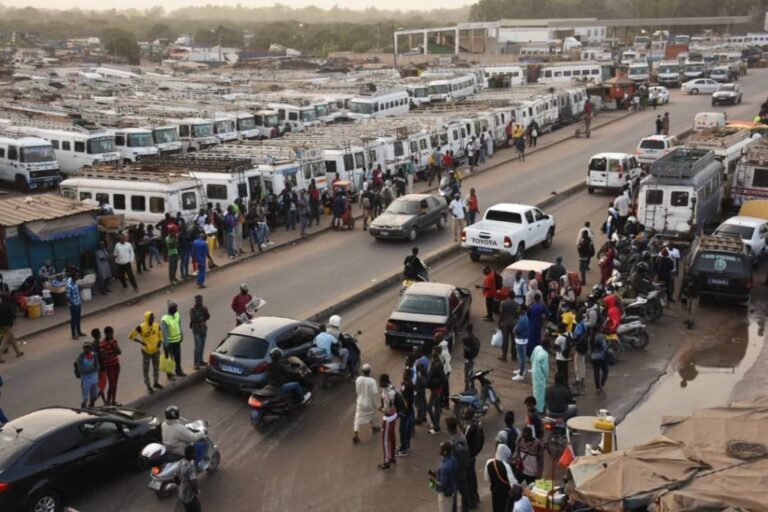
Urban transport across Senegal faced severe disruptions on Monday as fourteen transport unions launched a coordinated three-day strike scheduled to run through April 1, 2026.
This industrial action has already left many commuters stranded and caused significant traffic gridlock in several major metropolitan areas. The mobilization, which includes the influential Senegal Road Transport Union, stems from deep-seated grievances regarding the management of the sector and the government’s refusal to officially recognize a new union entity established in February 2026.
Beyond administrative disputes, transport professionals are denouncing what they describe as systemic harassment and corruption on the country’s highways. The unions are demanding the immediate implementation of previous agreements, specifically those aimed at reducing the number of roadside checkpoints, which they argue authorities have failed to honor. Furthermore, strikers have criticized a perceived breakdown in formal dialogue and a lack of transparency from the state, asserting that the failure to follow established procedures has hindered any constructive resolution to their demands.
To mitigate the impact on the public, the National Railway Management Company has announced the deployment of seven additional trains to the Regional Express Train (TER) network, increasing the total number of active trains from 15 to 22 and shortening wait times during peak hours. Additionally, the national bus operator Dakar Dem Dikk confirmed that its services remain operational. Meanwhile, the Minister of Land and Air Transport, Yankoba Diémé, has directed regional governors to take all necessary legal measures to ensure the free movement of vehicles and operators who choose not to participate in the strike.
TE/Sf/lb/abj/APA