



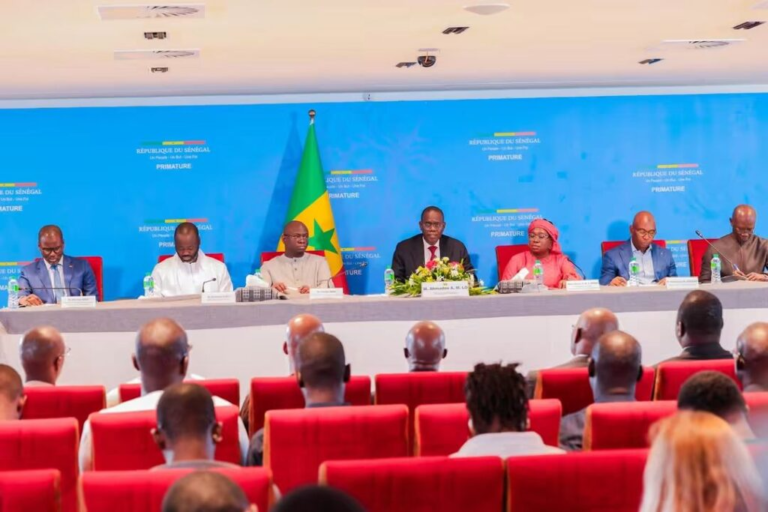
Senegalese Prime Minister Ahmadou Alhaminou Mohamed Lo publicly defended the necessity of passing the draft 2026 supplementary budget law (LFR) during a press conference on Sunday, October 25, 2026, addressing growing political resistance from the legislative majority.
The head of government justified the proposed fiscal adjustments by citing severe revenue shortfalls of 340 billion CFA francs alongside an unexpected 540 billion CFA franc increase in mandatory expenditure, largely driven by state energy subsidies and unbudgeted operational needs across the defense and security sectors.
To absorb the budgetary deficit, the draft legislation mandates a 555 billion CFA franc reduction in capital expenditure, which Prime Minister Lo characterized as a temporary deferral of low-readiness infrastructure projects to prioritize immediate state obligations. However, the ruling majority party in the National Assembly, Pastef-Les Patriotes, led by Assembly President Ousmane Sonko following his departure from the executive branch in May 2026, announced its opposition to the bill as drafted. Pastef leaders rejected the proposed expenditure trade-offs, demanding formal guarantees to protect public investments in health, education, and water infrastructure, alongside transparent audit disclosures regarding emergency fund allocations and public debt metrics.
With parliamentary debate on Bill No. 40/2026 officially rescheduled to Tuesday, October 27, 2026, the executive branch warned that legislative rejection would disrupt state operations and freeze liquidity for domestic construction and public works firms. The government maintains that passing the amended framework is critical to sustaining public service delivery, stabilizing domestic liquidity, and preserving the strategic objectives outlined in the nation’s Vision Senegal 2050 development program.
AC/Sf/lb/abj/APA