





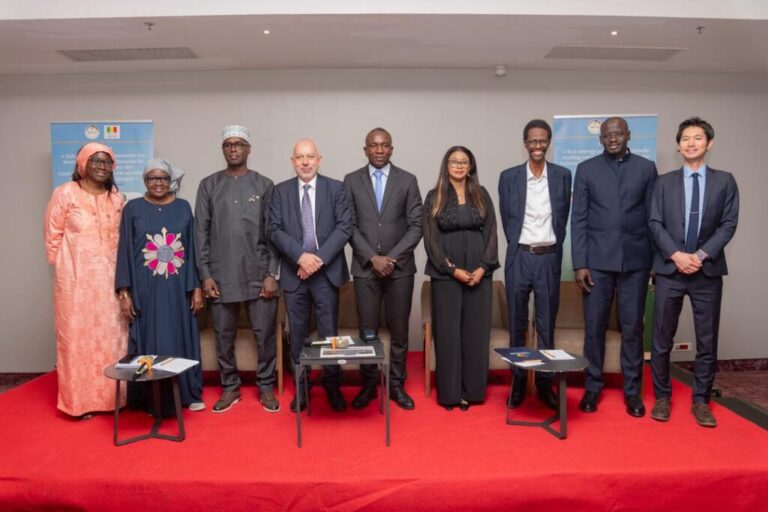
Senegal on Thursday launched the “Energy-Efficient and Climate-Friendly Cooling Solutions project to transform the cooling sector while strengthening the implementation of the country’s climate commitments.
Led by the Agency for Energy Economy and Management (AEME) in partnership with the United Nations Industrial Development Organisation (UNIDO), the project also involves the Directorate of Climate Change, Ecological Transition and Green Financing, as well as the National Climate Change Committee (COMNACC).
“Cooling is at once a climate challenge, an energy challenge, an industrial challenge and a development challenge,” said COMNACC President Libasse Ba at the launch ceremony. He noted that demand for air conditioning, commercial and industrial refrigeration, and cold chain services continues to rise due to demographic growth, urbanisation and the intensifying effects of climate change.
While cooling systems are increasingly essential for economic competitiveness, food security and public health, they are also “a significant source of energy consumption and, consequently, greenhouse gas emissions,” he said, pointing to energy-intensive equipment and refrigerants with high global warming potential.
Echoing these concerns, AEME Director General Mame Coumba Ndiaye stressed that the rapid expansion of cooling—whether domestic, commercial or industrial—could, if left unchecked, strain the national power grid, increase costs for households and businesses, and raise greenhouse gas emissions.
In response, the project seeks to structure the cooling market around high energy-performance standards, accelerate implementation of minimum energy performance standards and energy labeling, and develop a pipeline of bankable projects capable of attracting climate finance.
Ndiaye recalled that the initiative builds on ongoing national reforms, including the adoption by the Council of Ministers on November 19, 2025, of a draft decree on energy labeling for new electric lamps and household appliances. She described the measure as a key step toward cleaning up the market and protecting consumers.
The ambition, she said, is to position Senegal as a West African leader in sustainable cooling while enhancing energy security and climate credibility.
Madeleine Diouf Sarr, Director of Climate Change, Ecological Transition and Green Financing, underscored the project’s institutional and climate significance. She said the partnership with UNIDO and AEME aims to ensure durable reductions in greenhouse gas emissions through improved energy efficiency, particularly in the industrial, energy and agricultural sectors.
The initiative is supported by the Green Climate Fund (GCF) through its “readiness” window. According to Diouf Sarr, the support promotes synergies between climate conventions and the Montreal Protocol framework.
Beyond regulatory progress, officials emphasised the need for measurable outcomes, including lower electricity consumption, reduced emissions and a lasting transformation of Senegal’s cooling market.
ARD/ac/lb/as/APA