





Dakar intends to strengthen its efforts against diet-related non-communicable diseases, including
hypertension, diabetes, kidney disease, and cancer, by focusing more on prevention, awareness, and improving healthcare services.
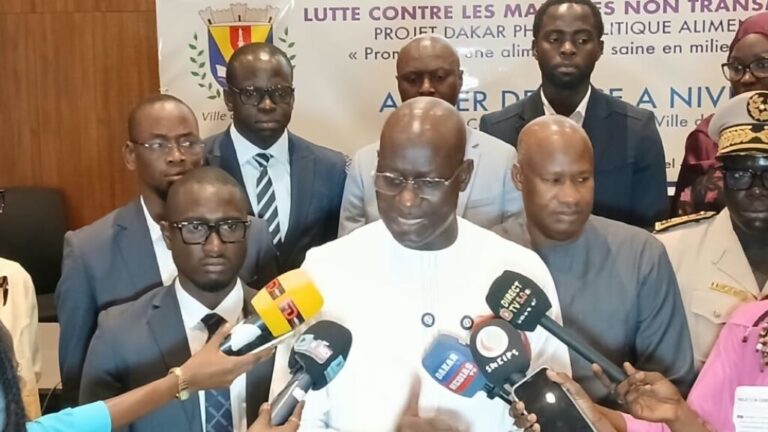
This direction was reaffirmed Thursday in Dakar by the mayor of the Senegalese capital, Abass Fall, at the opening of a City Council training workshop on non-communicable diseases and food labelling.
Organised as part of the Dakar PHC – Partnership for Healthy Cities project, with support from Bloomberg Philanthropies and Vital Strategies, the meeting aims to equip city councillors and staff with the knowledge they need to better contribute to the prevention of these diseases.
“The diseases discussed in this workshop seem to go unnoticed. They don’t close borders or disrupt classes.” “And yet, in Senegal, non-communicable diseases – high blood pressure, diabetes, kidney failure, cancer, and chronic respiratory diseases – account for more than half of all deaths,” Mr. Fall emphasised.
A worrying situation
The mayor particularly stressed the rise in high blood pressure in the capital. According to data presented at the meeting, one in four adults in Dakar has high blood pressure.
Even more concerning, of 100 people with high blood pressure, fewer than 30 are aware of their condition, only 16 are receiving treatment, and only five have their blood pressure under control.
For Abass Fall, these figures illustrate the scale of the challenge that local authorities must now face, as prevention must play a central role in local public policies.
He therefore urged participants not to consider the workshop as a mere information session, but as an opportunity to acquire tools for clear communication with the public and to better guide municipal decisions regarding health.
The City is investing in its healthcare infrastructure. The mayor reiterated that healthcare is among the responsibilities transferred to local authorities and, as such, is a priority for the City of Dakar.
Several investments have already been made in this sector, notably at Abass Ndao Hospital, where the municipality has built a mother-child unit, the equipping of which is currently underway. The city has also initiated the establishment of an imaging centre equipped with an MRI scanner and plans to create a major surgical specialty centre.
At the Institute of Social Hygiene, the municipality has also launched the construction of an Emergency Department, while a project to build and equip a level 3 hospital is planned for the Parcelles Assainies district.
One of the results highlighted by the mayor concerns the Khalifa Ababacar Sall haemodialysis centre in Liberte 6. Opened with a capacity of 37 patients, the facility now serves 85 patients, an
increase of 48.
“In just a few months of operation, less than a year, we have more than doubled the centre’s effective capacity,” said Abass Fall, who aims to increase this capacity to 150 patients within a year.
This progress, he explained, is the result of the work of healthcare staff, the Department of Health Action and Services to Individuals, the agreement between the City and the Ministry of Health, and the support of technical partners.
Nutrition at the heart of prevention
Beyond medical care, the City of Dakar intends to address risk factors related to eating habits.
Within the framework of the Partnership for Healthy Cities, the municipality has chosen to focus on schools, considered ideal locations for influencing eating habits from a young age.
The objective is, in particular, to promote food labelling to better inform consumers about their salt, sugar, and fat content.
“A label is nothing more than this: the sharing of information from the producer to the consumer. It’s about empowering Dakar mothers to make informed decisions,” the mayor explained. The municipality intends to work with the mayors of the communes, the decentralised state services, education stakeholders, and other parties involved to contribute to the implementation of food labelling regulations.
This initiative comes in a context where the World Health Organization is encouraging states to better regulate school food environments and protect children from excessive consumption of products high in sugar, salt, and fat.
Dakar in the Network of Healthy Cities
Since 2018, the City of Dakar has been a member of the Partnership for Healthy Cities network, an initiative of Bloomberg Philanthropies conducted in partnership with the World Health Organization and implemented by Vital Strategies.
The network now includes 74 cities committed to preventing non-communicable diseases. Dakar is working alongside other African cities, including Ouagadougou, Abidjan, Freetown, and Kumasi.
For Abass Fall, this international cooperation should enable Dakar to strengthen its local health policies and better respond to new health challenges.
Thursday’s workshop, led by Professors Maboury Diao, Demba Diedhiou, and Moustapha Faye, among others, aimed to help elected officials and municipal staff better understand the mechanisms of hypertension, diabetes, and kidney disease, as well as identify the levers for
action available to local communities.
In closing, the mayor quoted the Senegalese academic Cheikh Anta Diop:
“Arm yourselves with knowledge to the teeth,” believing that “a council that deliberates without knowledge is tempted to vote randomly; a council that knows decides.”
TE/fss/as/APA