





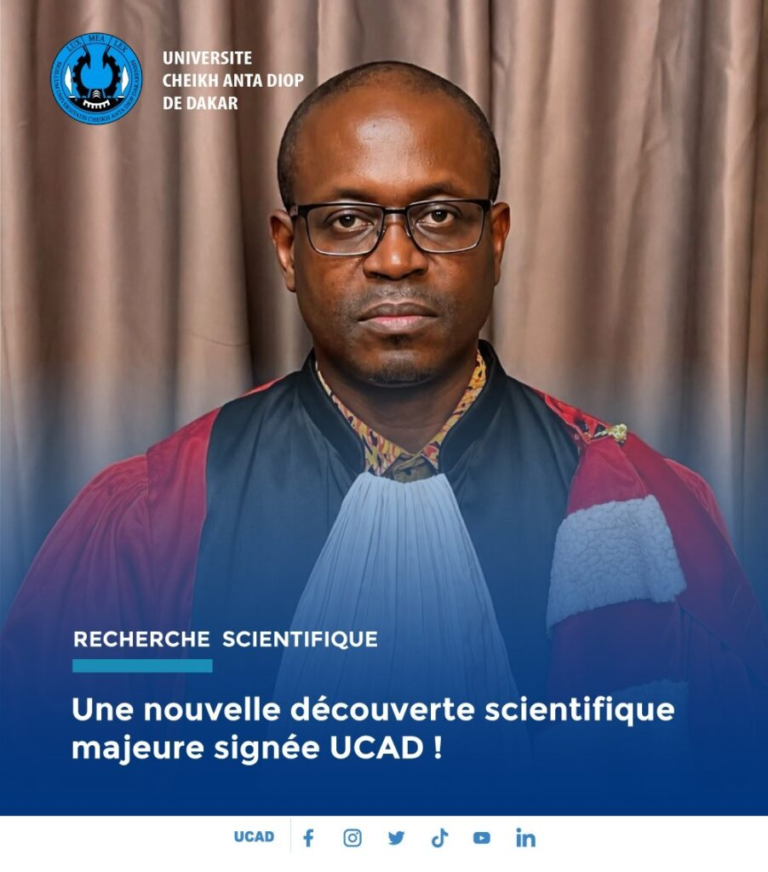
Researchers at Cheikh Anta Diop University (UCAD) have identified a new bacterial species, Neobacillus camarae, isolated from the breast milk microbiota of Senegalese mothers.
The discovery, published in an international scientific journal, opens up promising avenues for combating childhood malnutrition, UCAD announced on its digital platforms. This medical breakthrough resulted from a collaborative research effort involving UCAD, IHU Méditerranée Infection, and Aix-Marseille University. The joint project forms a central part of ongoing studies aimed at developing innovative, probiotic-based solutions to prevent and treat malnutrition among young children.
The newly identified bacterium was named Neobacillus camarae in honor of Makhtar Camara, a professor and researcher at UCAD’s Faculty of Medicine, Pharmacy and Dentistry (FMPOS), in recognition of his significant contributions to microbiology research. According to UCAD, the discovery could directly support the future development of new probiotic therapies specifically designed to improve the nutritional health of infants. UCAD Rector Alioune Badara Kandji congratulated Prof. Camara and the entire research team, saying the distinction brings honor to UCAD, Senegal, and the growing international recognition of African scientific research. The university further noted that the achievement reflects its deep commitment to excellence in research and its dedication to addressing major public health challenges through scientific innovation.
TE/Sf/lb/abj/APA