





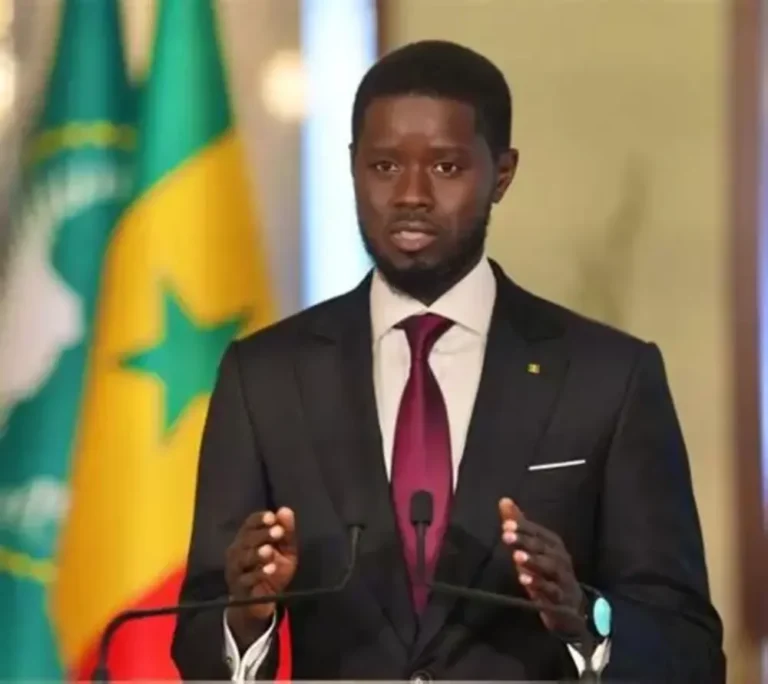
During the Council of Ministers meeting held on Wednesday, April 8, 2026, President Bassirou Diomaye Faye called for an urgent strengthening of social dialogue between the government and road transport unions.
The President’s intervention follows a series of strikes initiated on April 1, which have significantly disrupted the movement of people and goods across the country. Emphasizing a policy of listening and mutual responsibility, the Head of State expressed concern over the cyclical nature of these labor disputes and their negative impact on Senegal’s broader economic activity. He reaffirmed his administration’s commitment to good governance in the sector while insisting that all parties must operate within the framework of existing laws and regulations.
To address the underlying causes of the unrest, President Faye directed the Prime Minister and the Minister of Land and Air Transport to ensure the inclusive implementation of recommendations from the October 2024 National Transport Conference. This directive aligns with the government’s broader strategy to modernize the sector, which includes optimizing road safety controls and enforcing strict adherence to the Highway Code. The Prime Minister further highlighted the necessity of renewing the national vehicle fleet and enhancing the efficiency of public transport systems, specifically through the expansion of Dakar Dem Dikk, the Bus Rapid Transit (BRT) network, and licensed private operators.
Looking toward long-term solutions, the President has instructed the Minister of Land Transport to submit a comprehensive report by the end of April 2026 detailing the challenges and prospects for a total transformation of Senegalese road transport. This roadmap is expected to include a clear timeline for infrastructure improvements and the development of a more efficient multimodal system. By integrating the Regional Express Train (TER) and the national railway services (CFS and GTS), the government aims to create a seamless urban and interurban transport network that reduces reliance on road transport alone and minimizes the potential for future industrial action.
TE/Sf/fss/abj/APA