



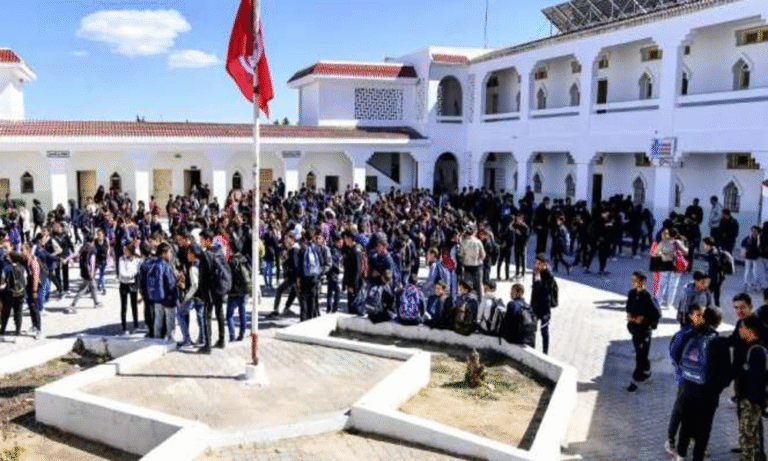
Tunisia’s school year opened under tension as a major standoff pits teachers’ unions against the Ministry of Education, with the threat of a nationwide strike set for October 17.
Weeks of negotiations have failed to ease teachers’ anger, as they accuse the government of failing to honour previous agreements and ignoring what they describe as legitimate demands. The unions are calling for improved salaries, the regularisation of contract teachers, and a comprehensive reform of school infrastructure. In their view, the state’s unfulfilled commitments have deepened a crisis that has been building for years.
In a joint statement, the main unions in the sector declared that “teachers’ patience has reached its limit,” accusing the government of stalling.
The Ministry of Education, for its part, insists it is making efforts to respond to demands but cites fragile public finances and the country’s ongoing economic crisis.
The confrontation comes against the backdrop of a deteriorating social and economic climate. Tunisia’s public education system faces chronic problems: dilapidated facilities, overcrowded classrooms, shortages of teaching resources, and a growing shift by families toward private schools.
The tensions compound a political context already marked by international criticism of President Kaïs Saïed’s increasingly authoritarian rule, with the opposition accusing him of locking down institutions and ignoring social dialogue.
Parents, directly affected, have voiced alarm. Several associations fear a paralyzed school year and are urging a quick compromise. “Our children should not pay the price of this standoff,” a parents’ federation said in a statement on Sunday.
If the October 17 general strike goes ahead, it could paralyze the entire education system and put further pressure on a government already criticised for failing to revive the economy and calm social unrest. The coming weeks will be decisive: any concessions by the ministry would be seen as a union victory, while a protracted standoff risks further undermining the state’s credibility and deepening public discontent.
MK/sf/lb/as/APA