



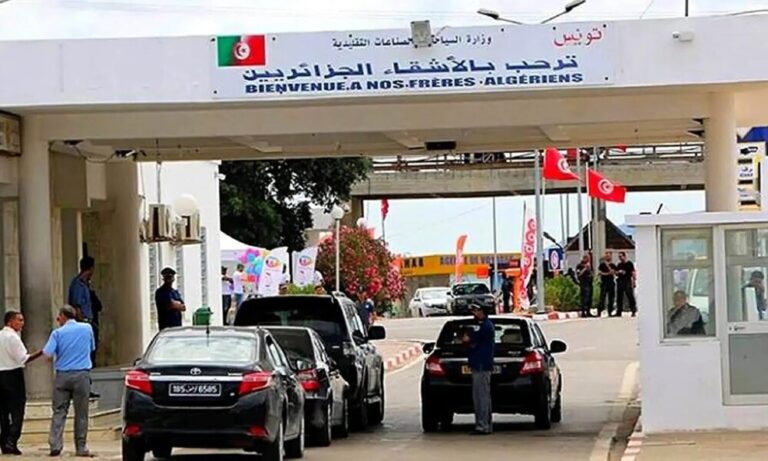
Buses carrying Algerian tourists have been prevented from crossing the border into Tunisia following the sudden implementation of a new administrative requirement, a decision deemed opaque and poorly coordinated by industry professionals.
Multiple buses traveling from Algeria to Tunisia were halted on Sunday, December 7, at land crossing points, particularly at Oum Tboul, according to tour operators and professional associations.
The Algerian authorities reportedly imposed a new requirement on the same day to possess an “international transport authorisation,” effectively replacing the ordinary tourist licenses previously used for organised tours.
No official communication had been released ahead of the restriction, catching dozens of vehicles transporting tourists for the year-end holidays completely off guard.
Testimonies gathered by several agencies, including Sid Travel, describe the measure’s immediate application, leading to the immobilisation of buses full of travelers who had booked their stays well in advance.
The national tourism association, Kounouz El Djazaïr, confirmed that the restriction now applies to all border posts, condemning a complete lack of consultation with operators, especially during a period when travel demand to Tunisia traditionally peaks.
On the ground, sources cited by the daily newspaper El Khabar suggest the decision aims to address “abusive practices” related to the exploitation of the tourist allowance by some organised groups.
According to these sources, several bus circuits allegedly allowed individuals to bypass currency exchange rules under the guise of tourism, giving rise to what authorities describe as “malpractices” and so-called “pending tourism” trips, where week-long stays were sometimes used for activities other than classic tourism.
However, the abruptness of the implementation raises serious questions. No transitional period was granted to carriers, no clear procedure was communicated for obtaining the required license, and no public announcement had prepared travelers for these reinforced checks.
Sector professionals are denouncing the measure as “improvised” and “disconnected from the reality of travel flows,” arguing that it creates a climate of uncertainty detrimental to outbound tourism, which is already weakened by regulatory fluctuations.
This blockage comes as Tunisia remains the top destination for Algerian tourists, and operators were counting on the high season in December to offset a sluggish year. Without rapid clarification from the authorities, several tour operators warn, the situation could worsen in the coming days, with a direct impact not only on travelers but also on the tourist revenues of both countries, which are heavily dependent on the fluidity of their land border.
MK/ak/sf/lb/as/APA