





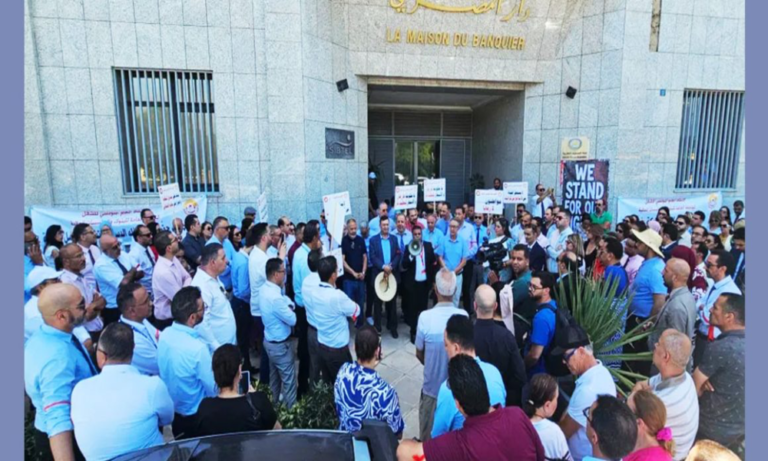
Tunisia’s banking, financial, and insurance sectors have entered a three-day strike following a call from the main union to this effect.
The move has triggered disruptions for individuals and businesses alike as negotiations between social partners remain deadlocked.
The strike which began on June 23 is scheduled to run until June 25.
The industrial action, initiated by the General Federation of Banks and Financial Institutions—a branch of the Tunisian General Labour Union (UGTT)—comes amid persistent tensions over wage demands and sector-wide negotiations.
The down-tool is affecting several essential services for citizens and corporate clients. Standard banking operations, pension payouts, the processing of administrative tasks, and payroll services are experiencing significant disruptions. The situation has raised concerns among users, particularly as the end of the month traditionally sees peak activity across bank branches.
On the eve of the strike, the Banking and Financial Council (CBF), representing employers, and the UGTT outlined their respective positions in separate statements. Both parties defended their stance regarding the progress of social dialogue and the prerequisites for a potential agreement. The CBF highlighted the economic constraints facing financial institutions, while the union emphasised the urgent need to meet employee expectations and safeguard their purchasing power.
Beyond the immediate dispute, the strike underscores the broader challenges facing social dialogue in Tunisia.
The banking sector plays a pivotal role in the national economy by financing businesses, facilitating payments, and managing savings. Any prolonged interruption of its activities risks impacting economic trade and the day-to-day operations of numerous administrations and enterprises.
Nevertheless, observers note that talks between employer representatives and trade unions are continuing amid the ongoing strike. Both sides have expressed a desire to maintain sector stability while defending their respective interests, raising hopes for a swift resumption of formal talks toward a negotiated settlement.
As employees maintain their strike action and clients adapt to the temporary disruptions, the outcome of the dispute will largely depend on the ability of social partners to find common ground on outstanding demands.
Against an economic backdrop marked by financial pressure on both households and businesses, the resolution of this social standoff is being closely watched by Tunisia’s economic actors.
MK/Sf/lb/as/APA