



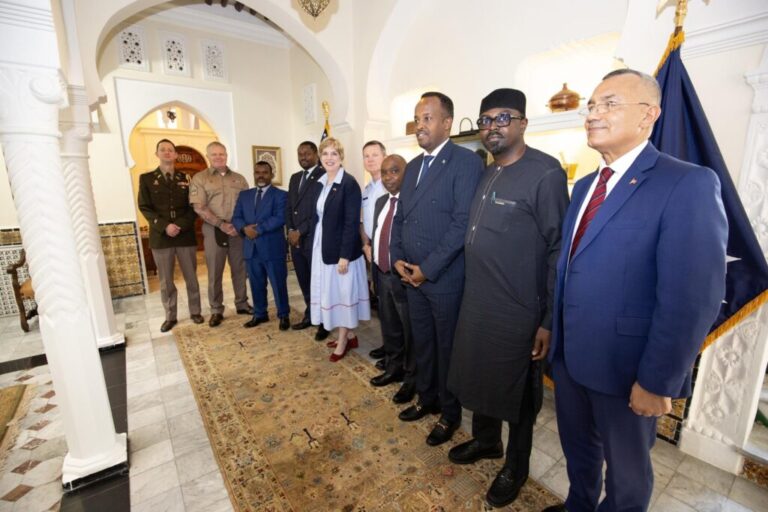
U.S. General Michael E. Tudor, head of Special Operations Africa (SOCAFRICA), visited Algiers to promote regional security cooperation. His meetings with Algerian military leaders and African diplomats underscore a central challenge for Washington: Algeria’s reluctance to fully commit to U.S.-backed security partnerships, despite its willingness to engage in dialogue.
General Tudor’s visit focused on strengthening African security capabilities and combating terrorism and other transnational threats, key priorities for the U.S. in the region. However, Algeria’s long-standing doctrine of non-interference and its focus on national sovereignty appear to be a roadblock to deeper engagement.
During a diplomatic lunch hosted by U.S. Ambassador Elisabeth Aubin, discussions with ambassadors from countries like Nigeria, Kenya, and Tunisia touched on shared challenges such as maritime piracy and cross-border trafficking. While Algeria participated in these talks and presents itself as a regional mediator, it remains hesitant to form the kind of operational alliances Washington is seeking.
This cautious approach comes at a time of increasing competition for influence in Africa. Russia, through its Africa Corps group, is expanding its military footprint, while China continues to invest in strategic infrastructure. In this evolving geopolitical landscape, Algeria is attempting to be a vital partner without sacrificing its autonomy.
For the United States, the goal is to create credible alliances to contain crises spreading from the Sahel to the Horn of Africa. General Tudor’s visit was a clear signal of Washington’s desire to integrate Algeria into this cooperative dynamic.
Ultimately, the visit highlights the complex and often ambivalent nature of the U.S.-Algerian relationship. While both nations recognize a shared strategic interest in combating terrorism, Algeria’s deep-seated geopolitical hesitations and doctrinal differences continue to limit the potential for a truly integrated partnership. Algiers may talk of cooperation, but its actions suggest a strong preference for maintaining its independence above all else.
MK/ac/fss/abj/APA