






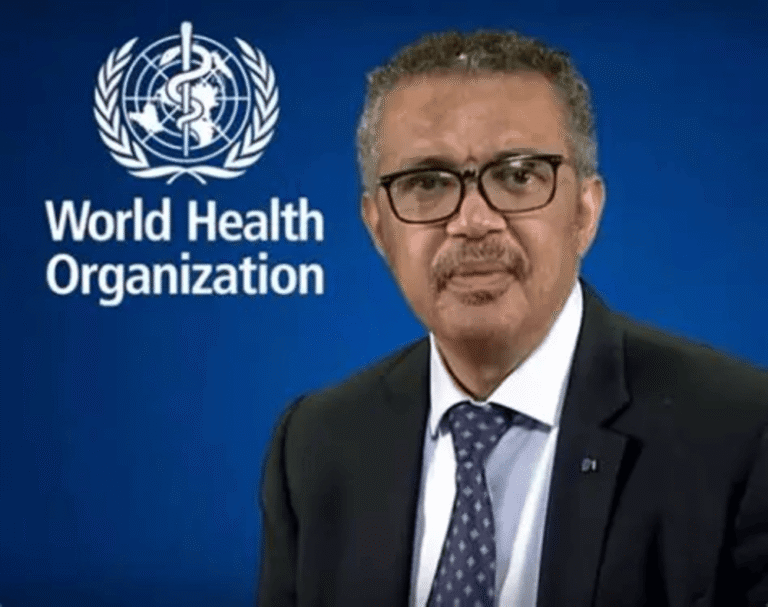
World Health Organization (WHO) Director-General Tedros Adhanom Ghebreyesus opened the 79th World Health Assembly in Geneva on Monday, May 18, 2026, by fiercely defending the agency’s reform record and advocating for a completely restructured global health architecture.
Underscoring the immediate gravity of global health threats, Tedros revealed that he had officially declared a Public Health Emergency of International Concern just one day prior, following an Ebola resurgence in the Democratic Republic of Congo that has already crossed the border into Uganda. He also pointed to the agency’s recent management of a Hantavirus outbreak in Spain as further evidence of an increasingly volatile epidemiological landscape requiring centralized coordination.
The Director-General explicitly addressed the severe financial crisis triggered by the abrupt withdrawal of United States funding, which had previously forced the WHO to implement major program cutbacks and significant job losses. Despite these setbacks, Tedros assured member states that the agency has stabilized and funded 90% of its current core budget, though he acknowledged that securing the remaining 10% would prove challenging in the current economic environment. He credited this financial resilience to a pivotal 2022 reform that phased in hikes to member states’ assessed contributions, shifting the core budget dependency from volatile voluntary donations to stable quotas. He noted that without the first two installments of this plan, the impact of recent funding cuts would have been catastrophic.
To demonstrate the agency’s long-term value, Tedros highlighted a series of structural transformations achieved over the last nine years. On the scientific and emergency response fronts, the WHO has established a unified science division, launched an artificial intelligence-supported Global Health Data Hub, and opened the WHO Hub for Pandemic and Epidemic Intelligence in Berlin. Additionally, the agency expanded global medical infrastructure by creating the WHO Academy in Lyon and an mRNA technology transfer hub in Cape Town that is now active across 15 nations.
Looking forward, Tedros urged a profound overhaul of a global health system he described as increasingly crowded, complex, and fragmented. The assembly will now review a proposal for a member-state-led reform process hosted by the WHO to streamline international response mechanisms. Praising the “Accra Reset” initiative championed by Ghanaian President John Dramani Mahama, Tedros concluded his address by emphasizing that every nation ultimately seeks equity and operational sovereignty in safeguarding public health, expressing firm confidence that the international community possesses the capacity to enact these vital institutional changes.
AC/Sf/lb/abj/APA