





President Cyril Ramaphosa says South Africa will tighten migration enforcement and crack down on illegal entries as the country confronts a new wave of anti‑foreigner protests and rising xenophobic tensions.
In a televised address on Sunday night, Ramaphosa acknowledged government failures in managing migration and pledged “decisive action” to close loopholes, strengthen border controls and penalise employers who hire undocumented migrants.
“There have been weaknesses in the way migration has been managed. There have been weaknesses in rigorous and focused enforcement. There have been instances of corruption. There have been gaps in our systems that have undermined public confidence,” he said.
He outlined a host of measures to curb illegal migration, including actions targeting corruption by law enforcement officers and the continued recruitment of undocumented foreigners by South African employers.
The president said his government has finalised the National Labour Migration Policy, “which proposes maximum quotas for the employment of documented foreign nationals, and deals with the prosecutions of employers hiring undocumented workers.”
He confirmed that the National Labour Migration Policy – which sets quotas for employing foreign nationals – has been finalised, and that penalties for employers hiring undocumented migrants will be increased.
The Department of Employment and Labour has begun recruiting 10,000 inspectors to strengthen enforcement.
Ramaphosa said the government would introduce dedicated immigration courts to speed up deportations.
He added that refugee reception centres would be relocated to border posts and noted that the Border Management Authority intercepted more than 450,000 attempted illegal entries in the past year.
Ramaphosa warned that only authorised officials may enforce immigration laws, urging communities not to confront foreign nationals or take the law into their own hands.
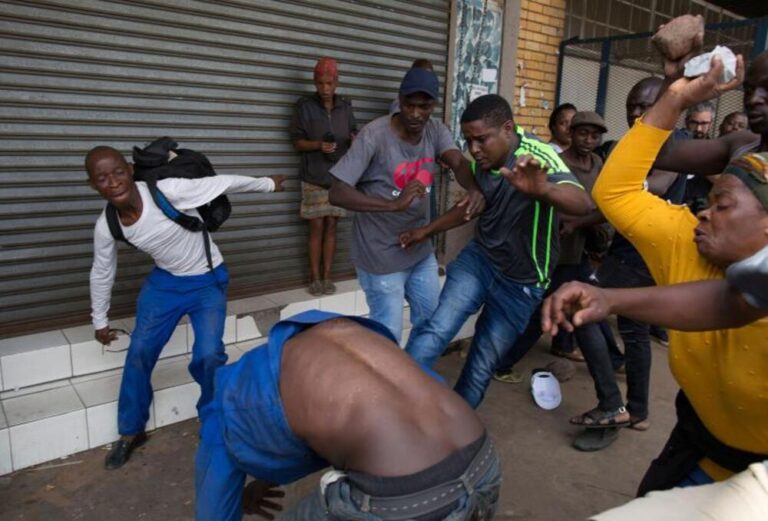
His remarks follow a surge in anti‑immigrant demonstrations, including the so‑called “Benoni Shutdown” planned for Monday, part of a broader pattern of unrest that has seen foreign-owned shops attacked, truck drivers targeted and migrants blamed for unemployment and crime.
South Africa has experienced recurring xenophobic violence since 2008, with periodic flare‑ups driven by economic hardship, political opportunism and misinformation.
However, Ramaphosa said South Africans “are not xenophobic” and vowed to act against groups exploiting public frustration for political or criminal agendas.
JN/APA