





Conflicts and soaring food prices are plunging the Democratic Republic of Congo (DRC) into one of the world’s worst food crises, according to the latest Integrated Food Security Phase Classification (IPC) data.
The United Nations Food and Agriculture Organization (FAO) and the World Food Programme (WFP) report that the number of people experiencing acute food insecurity in the DRC has reached an unprecedented peak, per the most recent IPC analysis.
Currently, 28 million Congolese are grappling with acute hunger (IPC Phase 3 and above) , a staggering increase of 2.5 million since the violence erupted last December. Of these, 3.9 million are in emergency hunger conditions (IPC Phase 4).
Over the past six months, the DRC’s food situation has worsened, driven by conflict, economic instability, and skyrocketing prices of basic goods, endangering millions of lives.
Internally displaced people fleeing violence are the most vulnerable, bearing the brunt of this food crisis. Over two million displaced individuals face acute hunger, including 738,000 in emergency conditions (IPC Phase 4).
“The humanitarian situation in the DRC is deteriorating rapidly. Families already struggling are now facing even harsher conditions,” said Eric Perdison, WFP Regional Director for Southern Africa and acting Country Director for the DRC. “We’ve resumed operations in parts of North and South Kivu, but we urgently need additional resources.”
The crisis is most severe in the east, where conflict has cut millions off from livestock and livelihoods. Over ten million people in this region suffer from acute food insecurity, with 2.3 million in emergency conditions.
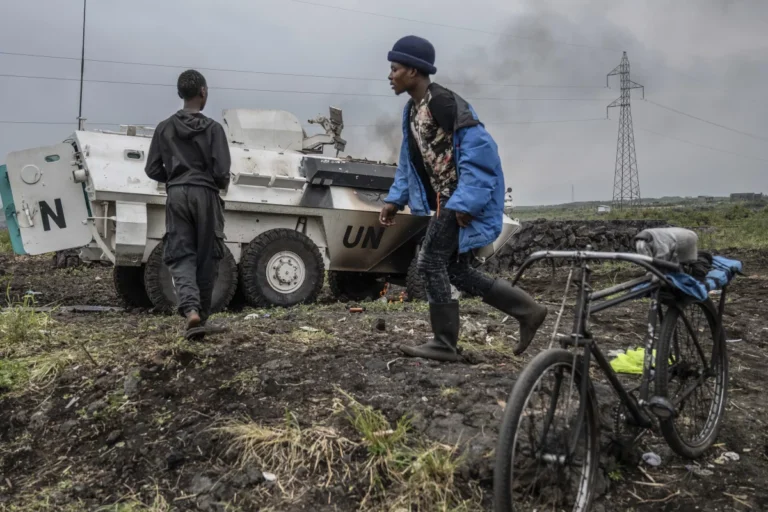
In North Kivu, South Kivu, and Ituri, violence has displaced tens of thousands, depriving them of food and humanitarian aid. Clashes disrupt food production and trade, while security risks hinder humanitarian access.
The depreciation of the Congolese franc, bank closures, and income losses have made basic necessities unaffordable for many families. Inflation and supply chain disruptions have driven food prices up, with staples like maize flour, palm oil, and cassava flour rising by up to 37% compared to pre-crisis levels (December 2024).
The WFP and FAO are working together to provide critical food and nutritional aid while building community resilience.
Since the start of the year, 464,000 people in accessible eastern areas have received food aid and nutritional support, including 237,000 in Bunia.
Beyond emergency relief, the FAO and WFP have invested in resilience programs in North and South Kivu to bolster long-term food security.
“The situation is catastrophic: crops are lost, food prices are surging, and millions are acutely food insecure, growing ever more vulnerable,” said Athman Mravili, FAO’s acting representative. “We need more resources to support sustainable livelihoods for the displaced. Our goal is to assist 1.6 million people in North Kivu, South Kivu, Ituri, and Tanganyika provinces.”
In 2025, the WFP plans to provide food and nutritional aid to 6.4 million people in the DRC while pursuing long-term solutions. An urgent $399 million is needed to sustain operations and address escalating humanitarian needs over the next six months.
The WFP and FAO are calling on the international community to increase funding and humanitarian access to avert a large-scale disaster. Without immediate action, hunger will continue to rise, deepening the plight of the most vulnerable.
TE/lb/as/APA