





Across Africa, growing attention to sustainable finance is creating new opportunities to mobilise capital towards development priorities, including gender equality and women’s economic empowerment.
For UN Women, unlocking this opportunity requires more than developing new financial instruments. It requires strengthening the capacity of financial institutions to understand, design, evaluate and implement financing approaches that integrate gender considerations into investment and capital mobilisation.
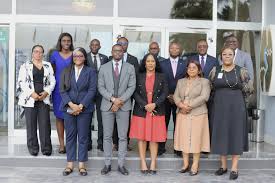
This was the focus of a recent capacity-building engagement between UN Women and the ECOWAS Bank for Investment and Development (EBID) in Lomé, Togo.
The programme brought together EBID senior leadership and technical teams from across the institution to deepen understanding of sustainable finance and gender-responsive financing instruments, while exploring how these approaches can support the Bank’s broader institutional and development objectives.
Moving Gender Finance from Concept to Practice
Gender-responsive finance encompasses a range of approaches and instruments that can help direct capital towards investments that contribute to gender equality.
These can include gender bonds, social and sustainability bonds, gender-lens investment strategies and other forms of sustainable finance that incorporate gender-related objectives, eligibility criteria and impact considerations.
The Lomé engagement therefore focused not on a single financial product, but on building the institutional knowledge required to assess and apply these approaches effectively.
The participants explored the global and regional gender finance landscape, international market standards including the International Capital Market Association (ICMA) principles.
The programme also drew on UN Women’s guidance documents including the Bonds to bridge the gender gap: A practitioner’s guide to using sustainable debt for gender equality; Case study series: Innovative financing for gender equality via bonds; and Gender bonds: A toolkit for the design and issuance of gender bonds in Africa.
Financing Gender Equality at Scale
While Africa’s financing needs are significant, the resources dedicated to advancing gender equality remain insufficient. Women entrepreneurs across the continent face an estimated $42 billion financing, and closing it could add up to $316 billion to Africa’s GDP.
Therefore, the challenge is not simply to increase the amount of capital available, but in tandem, to strengthen the systems through which that capital is allocated.
Financial institutions including regional development finance institutions such as EBID, can play an important role in this process by integrating gender considerations into investment strategies, financing frameworks, project pipelines and impact measurement.
“The opportunity is not simply to create more gender-labelled financial products. It is to strengthen the financial ecosystem so that capital can systematically identify, finance and measure investments that advance women’s economic empowerment.”
GIK/APA