



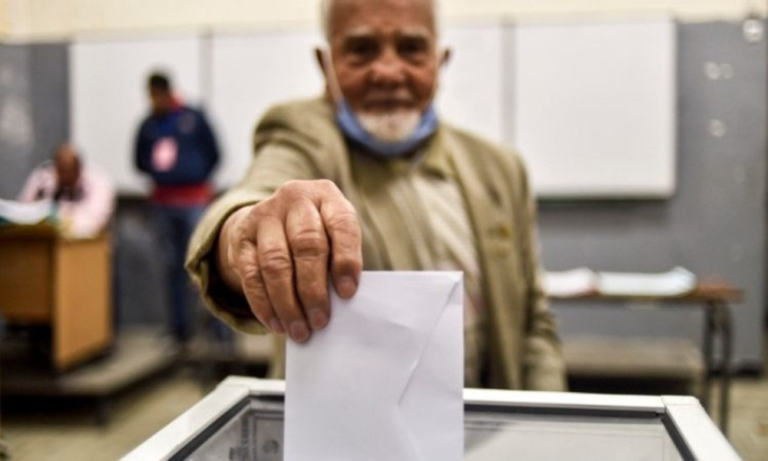
The Algerian government has launched an extensive political project aimed at reforming constitutional amendments, political party laws, and the electoral code.
While authorities present this as an unprecedented dynamic designed to break from past practices of marginalization and exclusion, the real-world impact of these changes remains hindered by a lack of institutional guarantees and significantly eroded public trust. At the National People’s Assembly (APN), the executive branch is currently consulting with both the presidential coalition and opposition parties to display a sense of pluralism.
Despite the official narrative of a “transformative” shift, critics note that the debate is occurring within a framework strictly controlled by the executive branch. Existing institutional balances remain largely unchallenged, and the absence of strong dissenting voices is viewed by some as a symptom of a weakened and fragmented political landscape resulting from years of judicial and political pressure. While the participation of historically critical parties like the RCD is touted as proof of political normalization, it may instead highlight the lack of alternative spaces for political expression outside of government-proposed frameworks.
The current parliamentary discussions are largely confined to technical adjustments rather than substantive reforms. Critical issues—such as the independence of the electoral administration, equal media access, and the neutrality of the state apparatus—have yet to be addressed in depth. Although the Prime Minister has called for “responsible and constructive dialogue,” these commitments to the rule of law face an institutional reality dominated by the executive branch and a lack of effective oversight.
After focusing primarily on economic and social issues for several years, the government appears to be re-engaging with the political arena without a genuine redistribution of power or increased autonomy for political actors. As Algeria approaches upcoming elections, the process risks following a familiar pattern: technically sound organization that remains politically unpopular. Without restored popular trust and effective pluralism, this period of reform may simply continue a trend of “controlled reformism” that prioritizes state stability over genuine democratic transformation.
MK/AK/fss/abj/APA