





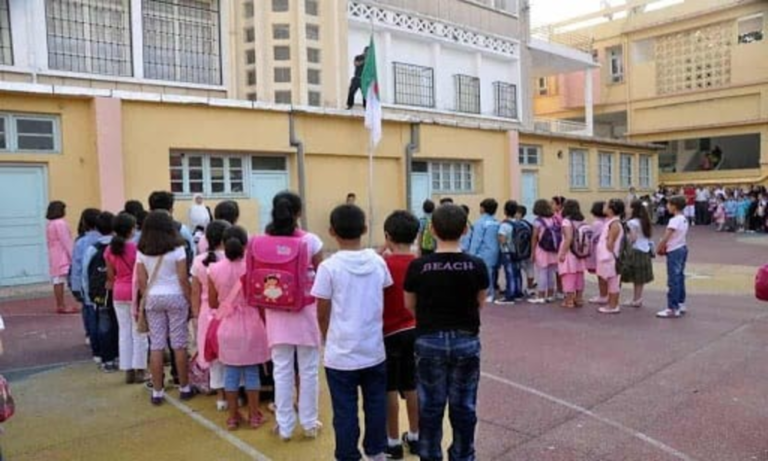
The start of the 2026-2027 school year for Algerian students has been postponed by two weeks, to September 21, on the instructions of President Abdelmadjid Tebboune.
This followed several requests to revise the calendar, notably due to the heatwave in the south and the challenges of the tourist season.
The Prime Minister’s office in Algiers announced on Saturday a revised school calendar for the 2026-2027 academic year, following instructions from President Tebboune to that effect.
Administrative staff will return to their duties on September 6, teachers on September 13, and students on Monday, September 21.
Students were initially scheduled to return to school on September 6, according to the calendar released at the end of July by the Ministry of National Education.
This change comes after several days of controversy surrounding the originally chosen date. Members of parliament representing southern provinces had notably asked the Minister of National Education, Mohamed Seghir Saadaoui, to revise the school calendar due to the particularly high temperatures that can still be recorded in these regions during the first half of September.
They cited the risks to students and staff, as well as the impact of the heat on learning conditions. The National Federation of Hotels and Tourism had also advocated for a postponement, appealing to the president.
Industry professionals believed that a return to school at the beginning of September would shorten the summer season, given that tourism continues for part of the month. The presidential decision thus appears to be a compromise between educational, climatic, and economic considerations.
The announcement of the postponement comes amidst a period of debate surrounding the Ministry of Education’s policies.
Several measures considered within the framework of the educational reform, particularly concerning the organisation of French and philosophy instruction, have drawn criticism from teachers and political leaders. The minister assured stakeholders that no subjects would be eliminated and that the proposed changes were part of a pedagogical reorganisation.
The Secretary General of the Workers’ Party, Louisa Hanoune, had notably asked the head of state to suspend the reform project and prioritise consultations involving education specialists, pedagogues, and linguists.
These criticisms have helped place education policy at the centre of public debate just weeks before the start of the school year.
The fact that the new schedule was announced by the Prime Minister’s office, with explicit reference to the president’s instructions, gives the decision a dimension that extends beyond the education ministry alone.
Without further official explanation, this presidential intervention comes at a time when Mohamed Seghir Saadaoui’s department is simultaneously grappling with the debate on pedagogical reform and the protests surrounding the organisation of the start of the school year.
MK/AK/Sf/fss/as/APA