





Despite official government rhetoric emphasizing “economic diversification,” Algeria’s proposed 2026 Finance Bill (PLF) reveals a persistent reliance on public spending, massive subsidies, and central dependence on volatile oil revenues.
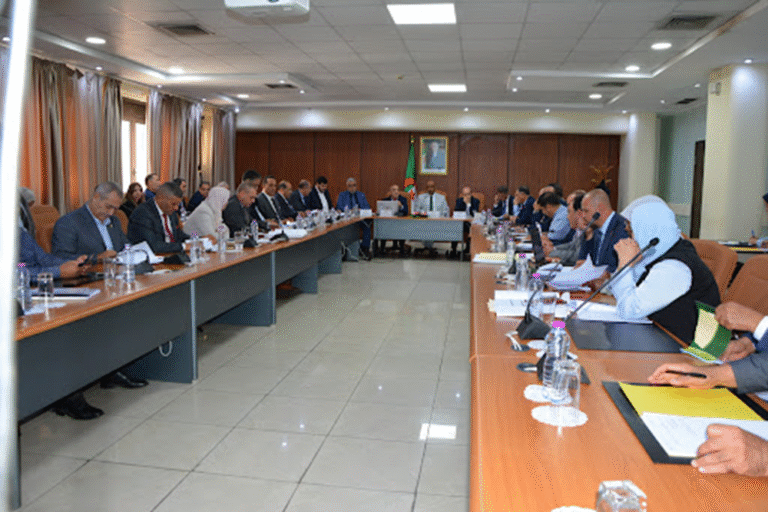
The PLF, framed as a measure for “economic resilience” and “social consolidation,” was examined by the National People’s Assembly (APN) Finance and Budget Committee. Hearings with budget and treasury officials confirmed a fundamentally redistributive budget lacking a clear roadmap for structural reform away from hydrocarbons.
The 2026 budget allocates a colossal 657.65 billion Algerian dinars (approximately €4.5 billion) to commodity subsidies alone. Key allocations include: €331 billion for cereals. €96 billion for milk. €100 billion to stabilize prices for essential goods like sugar, oil, and green coffee.
Beyond food, the government plans to spend over €106 billion to subsidize the production of desalinated water (addressing the chronic water crisis) and €24 billion for energy subsidies. These massive transfers demonstrate a persistent dependence on public spending without reforming the compensation system, a measure long urged by international financial institutions.
The 2026 Finance Bill forecasts nearly 98,000 new recruitments, with 45,000 prioritized for national education. This policy, often viewed as politically motivated to preserve social cohesion, further inflates a wage bill already estimated at over 35% of budgetary expenditures, potentially crowding out productive investment.
To address social tensions, the Treasury also highlighted “incentive” measures, including a 0% interest rate on certain real estate loans for specific categories of civil servants.
In terms of public investment, the Treasury has mobilized over 8,100 billion dinars (€56 billion) to finance 329 public projects, primarily in infrastructure and transportation. An increase of 687 billion dinars is planned for 2026, targeting rail, energy, and water projects.
However, observers note that these significant investments are proceeding without any public assessment of their profitability or effective monitoring of their implementation, a concern given the country’s recurrent history of project delays and cost overruns.
In conclusion, while the government pushes rhetoric of diversification, the 2026 Finance Bill solidifies the centrality of the public sector and confirms the Algerian economy’s reliance on oil revenues. The lack of tax reform, the low productivity of public enterprises, and the marginalization of the private sector continue to limit the country’s ability to generate sustainable, non-hydrocarbon growth.
MK/ac/fss/abj/APA