





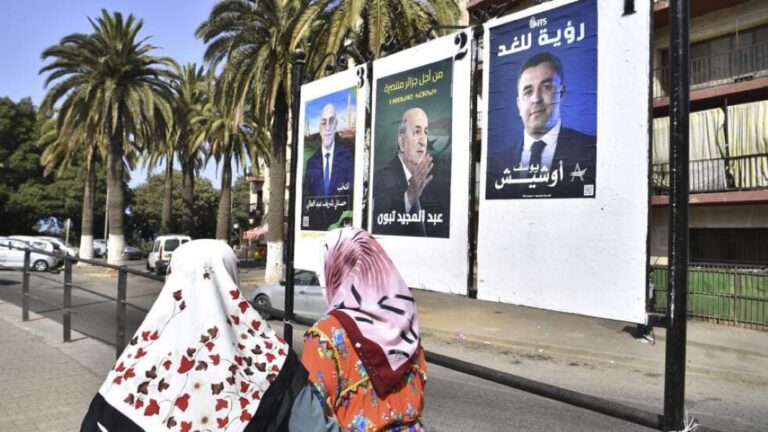
The authorities dreading the possibility of the storm after the initial sense of quietude have deployed a comprehensive security scheme as the absence of visible signs of protests still raises question marks over the political climate before July 2nd.
President Abdelmadjid Tebboune chaired a working meeting dedicated to the final preparations for the parliamentary elections scheduled for July 2nd, according to a statement from the presidency.
The election, which will elect 407 members of parliament for a five-year term, is mobilising all institutions in a stated effort to secure the electoral process, both in Algeria and among the diaspora.
The authorities are emphasising the objective of transparency and fairness, with enhanced oversight of the election. The Algerian head of state insists on the need to create “all the conditions” to guarantee a “clean, honest, and transparent” vote, in a climate presented as stable.
This official interpretation is based in particular on the absence of calls for a boycott or open protest in the political and media spheres, while political parties are ramping up their campaigns to woo voters to their disparate camps.
This apparent fluidity of the process, however, contrasts with a relatively peaceful political landscape, where competition seems to be unfolding within a tightly controlled framework.
The public support of all political actors for the upcoming elections, without any visible opposition, implicitly raises questions about the vitality of public debate and the scope for expression of critical voices.
On a technical level, the authorities highlight several adjustments introduced by the electoral reform. The exceptional revision of the electoral lists, launched on April 12, took place “under good
conditions,” according to the National Independent Election Authority (ANIE), which emphasises the increased use of digitisation.
The Ministry of the Interior, responsible for the logistical preparation of the election, also activated its coordination mechanisms to ensure the material deployment of the election, while the National Independent Electoral Authority (ANIE) retains a supervisory and oversight role.
The authorities are advocating a “new era” in elections, marked by the end of “manipulation practices” and better protection of voters’ votes.
However, this promise of institutional reform comes as trust between citizens and institutions remains a central issue, and where actual voter turnout will be a key indicator of the process’s credibility.
MK/AK/Sf/fss/as/APA