



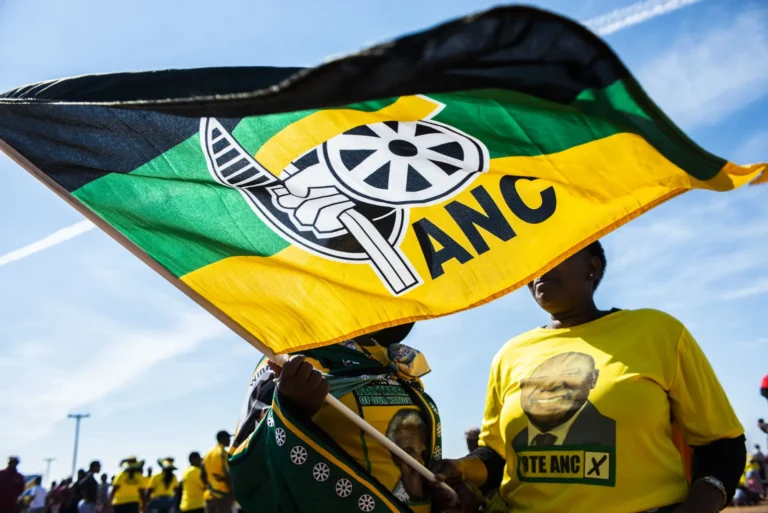
South Africa’s governing African National Congress (ANC) has lost outright control of more than 100 municipalities following its worst local government election performance since the advent of democracy in 1994.
Final results released by the Electoral Commission of South Africa (IEC) on Sunday show that the ANC secured 30.8 percent of the national vote in last week’s local government elections, down sharply from 46 percent in 2021 and far below the levels that once cemented its dominance of South African politics.
The result leaves the ANC as the largest party nationally but significantly weaker in negotiations to form municipal administrations across the country.
The party’s municipal footprint shrank dramatically, with outright majorities falling from 161 municipalities in 2021 to just 51 this year.
At the same time, the number of hung councils nearly doubled from 66 to 127, setting the stage for extensive coalition negotiations.
The ANC also failed to secure outright control in any of South Africa’s eight metropolitan municipalities, including Johannesburg and Pretoria.
It retained a provincial majority only in Limpopo, compared to six provinces in the previous local elections.
The Democratic Alliance (DA) finished second with 24.6 percent of the vote, retaining majority control of Cape Town.
Former president Jacob Zuma’s uMkhonto weSizwe (MK) Party emerged as a significant force, winning 9.6 percent of the vote and overtaking the ANC in Durban.
The Economic Freedom Fighters placed fourth with 6.2 percent.
ANC president Cyril Ramaphosa acknowledged the setback, describing the outcome as “a decline that is concerning” and urging all political parties to respect the results and prioritise service delivery during coalition talks.
Political analysts have linked the ANC’s declining support to persistent public frustration over poor municipal services, including unreliable water and electricity supplies, as well as corruption, unemployment and rising living costs.
JN/APA