



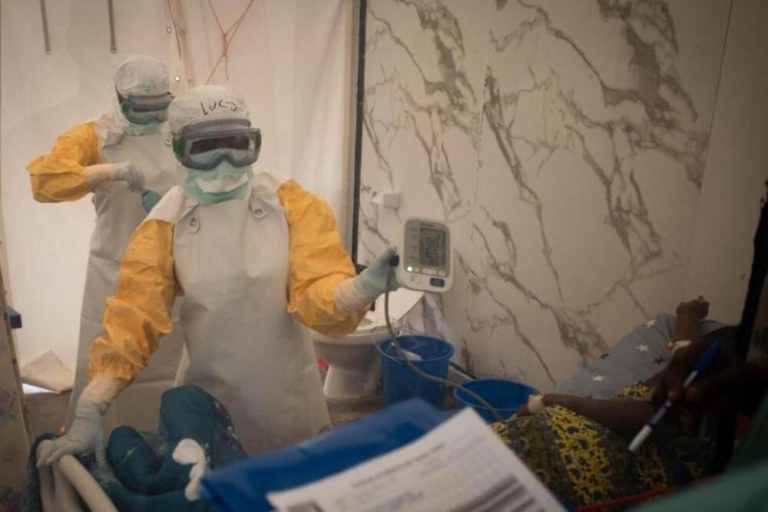
Facing daily viral exposure, the relentless loss of patients, and the ever-present threat of contracting the disease themselves, more than 2,900 health workers from Doctors Without Borders (MSF) are deployed across the Democratic Republic of Congo (DRC) to combat an Ebola outbreak linked to the Bundibugyo strain that has claimed over 5,300 lives in six months, the humanitarian agency reported.
Beneath the headline toll of what is described as the largest and deadliest epidemic in the nation’s history lies the harrowing daily reality of doctors, nurses, ambulance drivers, and sanitation personnel operating under persistent contagion risks despite protective gear and strict safety protocols.
In testimonies released on Thursday from hard-hit provinces including Ituri and North Kivu, MSF staff laid bare the steep physical and emotional toll of the emergency response. In Ituri’s Mongbwalu locality, 43-year-old nurse Alice Alyerunga recounted a devastating opening stretch at her treatment center, where roughly 100 people died and not a single patient survived during the facility’s first three weeks—leaving staff grappling with constant anxiety over viral exposure even in full protective equipment. For 35-year-old physician Sylvain Radjabu Lubangi, who served at an MSF treatment facility in Bunia, that peril became reality when he contracted Ebola himself; having watched fellow health workers succumb to the illness, he endured intense fear of dying before ultimately recovering, an experience that deepened his empathy for the terror his patients feel.
Frontline vulnerability extends well beyond treatment wards to transport and burial teams. Ambulance driver Richard Kakereka noted that transporting severely ill patients—some of whom die en route—entails acute danger due to physical handling and potential contact with infectious bodily fluids. Meanwhile, hygiene and sanitation personnel bear the heavy psychological strain of preparing corpses for safe burials, a deeply distressing duty particularly for workers confronting mass mortality for the first time, compounded by the grief of losing colleagues alongside patients.
Compounding clinical hazards are armed insecurity and community mistrust that actively endanger responders and obstruct care. Across Ituri, recurring fighting triggers population displacement that cuts teams off from the sick, while rampant misinformation stokes hostility toward medical interventions—resulting in threats against MSF personnel and an arson attack on a patient reception tent in Mongbwalu. MSF stressed that safeguarding frontline staff goes hand in hand with securing humanitarian access and building local trust, noting that community cooperation is indispensable for early case detection, timely treatment, and halting transmission chains in one of the most punishing epidemic environments the DRC has ever confronted.
TE/Sf/lb/abj/APA