





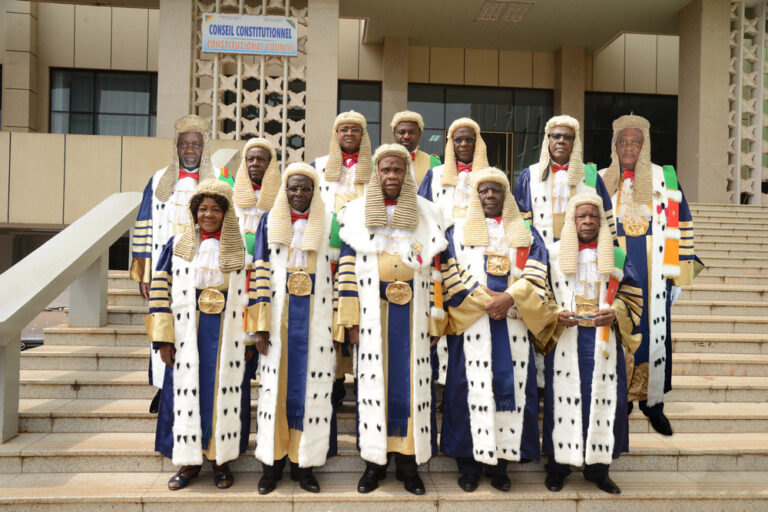
Cameroon’s Constitutional Council is set to announce the official results of the October 12 presidential election on Monday, October 27.
This crucial declaration comes amid heightened political tensions and reports of a violent crackdown on demonstrations held by supporters of self-declared president-elect, Issa Tchiroma Bakary.
On the eve of the announcement, lawyers for Tchiroma Bakary denounced a “murderous crackdown” that allegedly resulted in several deaths during a peaceful march held on Sunday at their client’s request.
According to multiple reports, several thousand people demonstrated on Sunday in Garoua and other cities, demanding the “victory of the people” claimed by Issa Tchiroma over incumbent President Paul Biya. Witnesses reported the use of live ammunition and several casualties, with media sources in Douala reporting four deaths. There has been no official statement from the authorities regarding the violence.
In a statement sent to APA, the Collective of President Tchiroma’s Lawyers expressed “deep dismay” and “outrage” over the violence, accusing defense and security forces of firing on “unarmed and defenseless” citizens. The lawyers also warned against a “worrying ethnicization” of the repression, which they deemed “dangerous for national cohesion and the stability of the country.”
The protests followed a claim by Issa Tchiroma himself, who stated in a video on his Facebook page that he had escaped a “conspiracy” to arrest him at his home on Sunday morning. He accused Paul Biya of being behind the alleged attempt, claiming that his only crime was winning the presidential election.
The collective of lawyers, which includes Dior Diagne, Jemal Telab, Eric Diamantis, and Moustapha Ndoye, urgently appealed to the international community, the African Union, and the CEMAC countries to intervene. They called for the immediate opening of an international investigation into the reported abuses.
The lawyers warned that the “silence of Cameroon’s partners in the face of these serious and inhumane abuses” could be perceived as “a form of moral complicity,” stressing that “the situation is grave” and that “justice and human dignity must prevail over fear and division.”
AC/fss/abj/APA