



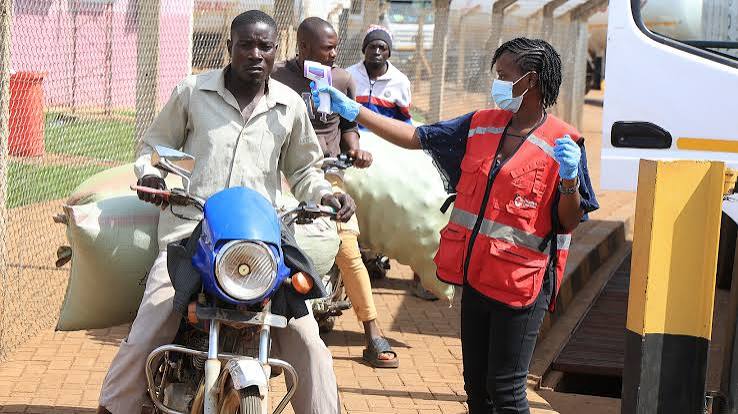
Amid the threat of Ebola spreading from neighbouring Democratic Republic of the Congo (DRC), the Central African Republic authorities stepped up health checks on Thursday at major crossing points along the Oubangui River in Bangui.
Handwashing, temperature checks and traveller registration are now central to the surveillance system, as daily traffic between the two countries continues.
The Central African Republic authorities intensified health checks on Thursday at crossing points along the Oubangui River, which separates the Central African Republic (CAR) from the DRC, to prevent a possible spread of the Ebola virus into CAR, TV5 Monde reported.
At the M’Poko Bac landing site in the municipality of Bimbo, south-west of Bangui, travellers arriving from the DRC are subject to a screening process that includes handwashing, temperature checks and the recording of their personal details.
“Passengers arriving by canoe stop at the entry point. They then get off one by one. One of our colleagues directs them to the handwashing station. After that, we raise their awareness and direct them to the tent for temperature checks and registration,” said Maldiana Bagalama, the health screening officer at the site.
The heightened vigilance is due to the geographical proximity of the two countries and the presence of the virus in three regions of the DRC along its more than 1,500-kilometre border with the Central African Republic.
The Oubangui River is an important transport route between the two countries. Many people use it every day for travel and commercial activities, making surveillance at crossing points particularly important for health authorities.
Despite the tighter controls, economic activity continues along the riverbanks. Fishermen, canoe operators, fresh fish vendors and sand workers continue to rely on the waterway for their livelihoods and trade.
According to information reported by TV5 Monde, over 10,000 cases of Ebola virus disease have been recorded in Africa, the vast majority in the DRC.
The outbreak has raised health concerns across the continent, with cases also reported in other countries, including Kenya and Nigeria.
In response, monitoring population movements and raising travellers’ awareness are essential measures to limit the risk of the virus being imported into the Central African Republic.
DM/Sf/lb/gik/APA