



The authorities in the Central African Republic are strengthening the capabilities of the Internal Security Forces (ISF) to counter the threat posed by improvised explosive devices (IEDs).
These devices have caused at least 285 civilian and military casualties in the country since 2020, according to data provided by the national police.
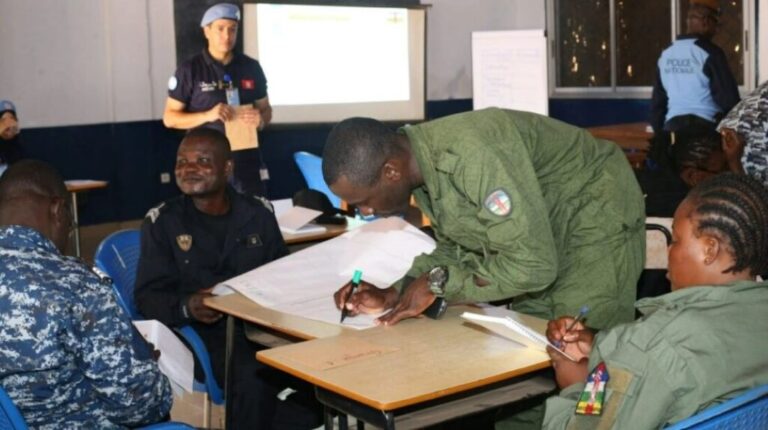
From November 9 to 13, 2026, twenty officers – comprising ten police officers and ten gendarmes – participated in a training program in Bangui, organized with support from the police component of the United Nations Multidimensional Integrated Stabilization Mission in the Central African Republic (MINUSCA).
The session was designed to enhance their ability to recognize IEDs, identify early warning signs of threats, and implement appropriate security measures in the event of an incident.
“Between 2020 and 2026, we recorded at least 310 incidents involving improvised explosive devices, resulting in at least 285 civilian and military casualties,” stated Banga Abel Mbendjane, a police commissioner and head of the arms and ammunition management department.
He emphasised the need to bolster the preparedness of security forces in the face of evolving terrorist and criminal threats.
Participants received training in areas such as alert and reporting procedures, securing affected areas, and preserving incident scenes and evidence.
Both theoretical and practical exercises were conducted to help the officers develop the correct instincts for field operations.
According to Tite Borgia Sengare, a peace officer at the National Police School, this training should help protect the officers themselves, their colleagues, and the general population from the risks posed by these devices.
The training also aims to improve the judicial handling of such incidents. According to Hana Khaterchi, of the MINUSCA Police, preserving evidence at the scenes of explosions is essential to
ensuring the legal validity of investigation files.
This initiative falls within the mandate of the MINUSCA Police, which supports CAR institutions in strengthening their operational and judicial capacities – a vital effort given that improvised explosive devices pose a persistent threat to the safety of both the local population and the forces deployed on the ground.
TE/Sf/fss/as/APA