





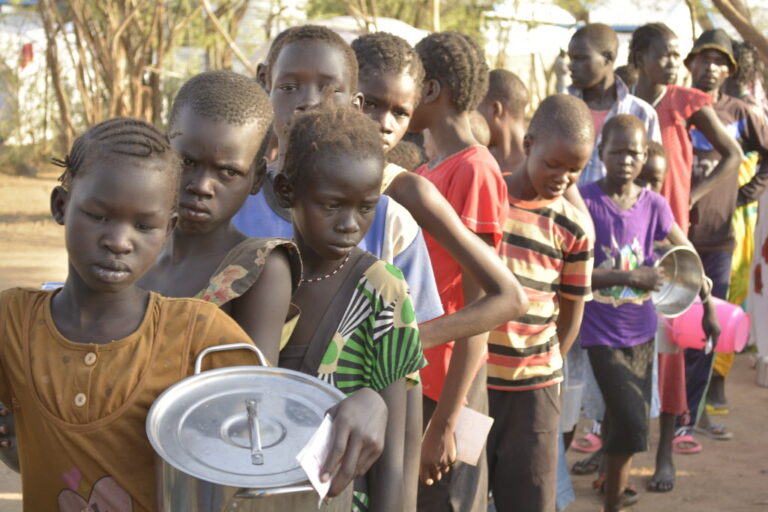
Save the Children is drawing searious attention to the desperate situation of families and children in South Sudan’s eastern Jonglei state.
The charity in a statement on Wednesday revealed that children there are surviving on leaves and water lilies as hunger surges towards famine levels in parts of the country following three months of escalating violence.
”Many families in Jonglei state have been left without essential and life-saving services since an escalation in violence in March led to the suspension of aid operations in areas and government orders to aid agencies to evacuate, triggering mass displacement” the statement said.
Save the Children suspended its humanitarian operations in Akobo East – a refuge for people fleeing violence across Jonglei – and relocated staff due to increased violence.
The withdrawal of services followed a similar suspension of operations in February in Walgak in Jonglei after armed gangs looted and vandalised a Save the Children office, destroyed a healthcare centre, and took three of the organisation’s vehicles.
Save the Children quoted one of its workers working in neighbouring counties of saying they have been hearing horrific stories of families going without humanitarian aid while flooding worsens.
”In some parts of the state, families and children are surviving on leaves and water lilies collected from swamps and seeds reserved for planting, while mothers walk for hours through floodplains to find anything edible for their children” the organisation said.
According to the organisation thousands of children are no longer attending school, while others are being forced into labour or early marriage as families struggle to survive.
”In areas where schools remain accessible, some children have stopped attending because they are too weak from hunger” it said.
The latest analysis by the Integrated Phase Classification (IPC) – the leading global authority on the severity of hunger crises – showed that four counties, including Nyirol and Akobo in Jonglei state, are at risk of famine.
According to the IPC, more than 7.8 million people – or six in 10 people in South Sudan – are facing acute food insecurity.
About 2.2 million children under five require treatment for acute malnutrition—an increase of around 90,000 cases since the previous analysis. Nearly 700,000 children are suffering from severe acute malnutrition – the deadliest form of hunger that requires urgent medical attention and specialised treatment.
Health workers have reported children arriving at nutrition centres severely malnourished after surviving for weeks on diluted porridge or a mix of salt and flour.
WN/as/APA