





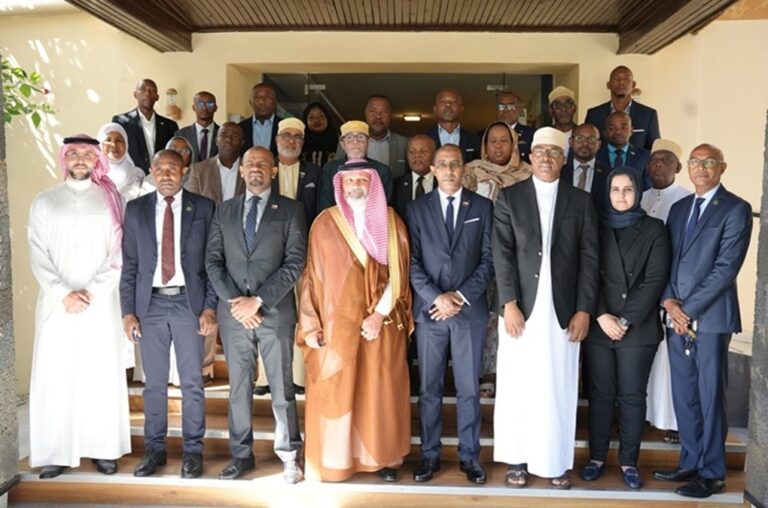
The Comoro Islands and Saudi Arabia are strengthening their economic cooperation through a high-level visit to Moroni aimed at assessing ongoing projects and exploring new partnerships.
The initiative is a direct result of a memorandum of understanding signed in November 2024 in Riyadh, which focused on bolstering economic and technical ties between the two nations.
A high-level Saudi delegation, led by Deputy Minister of International Economic Affairs Tarabozni Rakan Waddah, has been in the Comoros since Tuesday, August 5. The delegation held working sessions with Comorian authorities and private sector representatives in Itsandra on Wednesday, August 6. Key attendees included Comorian Minister of Economy Moustoifa Hassane, Government Secretary General Nour El-Fath Azali, and the President of the Union of Chambers of Commerce, Chamsoudine Ahmed.
Re-energizing trade and investment
Comorian Minister of Economy Moustoifa Hassane stated that the visit is a crucial step in the follow-up and implementation of the economic partnership memorandum. He noted that while Comorian traders once sourced supplies from Saudi Arabia, this is no longer the case. The visit aims to address this issue and “explore how to redefine and adopt a new partnership strategy” that is beneficial for investment and aligns with President Azali Assoumani’s “Emerging Comoros Plan.”
Minister Hassane also highlighted several Saudi-financed projects in the Comoros, including the rehabilitation of key roads (Lingoni, Mutsamudu-Sima, and Hahaya-Mitsamiouli) and the construction of health infrastructure.
Executive Director General for Relations between Saudi Arabia and Africa, Albaseer Ibrahim Abdoullah, expressed hope that the meetings would serve as “the opening of a partnership” and lead to “constructive dialogue, a strengthening of economic cooperation, and the discovery of promising and beneficial investment opportunities.” He emphasized the Comoros’ strategic position as a gateway to major regional, continental, and international markets, citing its membership in the World Trade Organization (WTO), the Arab Free Trade Area (GAFTA), and the African Continental Free Trade Area (AfCFTA).
This revitalized partnership comes as Gulf monarchies, including Saudi Arabia, are seeking to consolidate their economic and diplomatic influence in the Indian Ocean, a region of strategic importance for trade and maritime security.
ZMH/ac/Sf/fss/abj/APA