





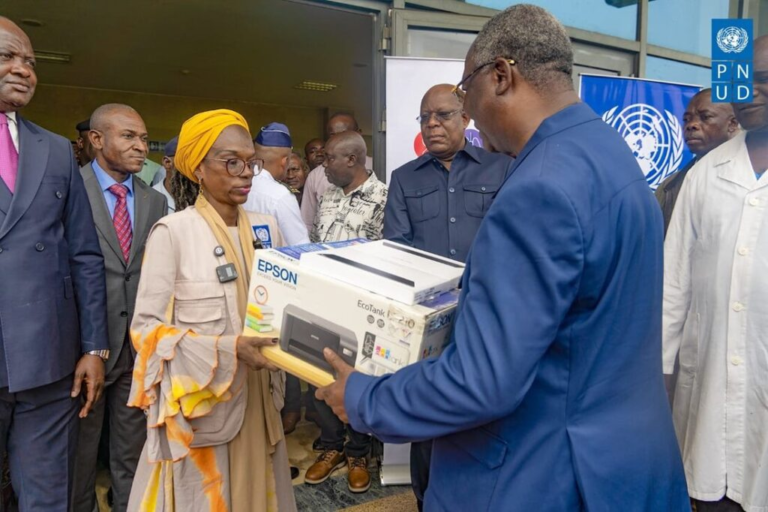
The integrated upgrade addresses three critical operational areas. First, the introduction of e-health equipment speeds up digital transformation across medical services, streamlining data sharing, improving patient tracking, and aiding clinical decision-making. Second, the commissioning of the P2 biosafety laboratory expands the nation’s analytical capacity, enabling safer and more precise diagnostic testing. Finally, the newly implemented biomedical waste management system introduces safer protocols for waste collection, treatment, and disposal, significantly lowering environmental and health risks for medical staff, patients, and local communities.
Supported by a joint partnership between the Government of the Republic of Congo, the Global Fund, and the United Nations Development Programme (UNDP), the initiative reflects a shared strategy to build resilient health institutions capable of managing ongoing clinical demands as well as sudden epidemic outbreaks. UNDP representatives reaffirmed their commitment to supporting structural health reforms that expand equitable access to quality care, ensuring that Congolese health facilities are better equipped to protect vulnerable populations against current and future public health challenges.
TE/Sf/lb/abj/APA