



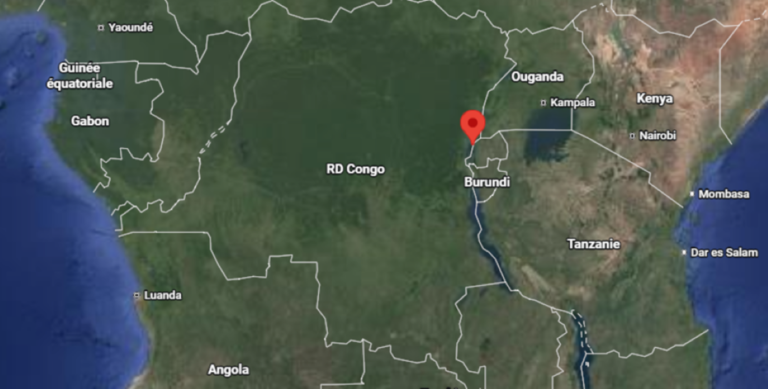
The Armed Forces of the Democratic Republic of the Congo (FARDC) and the AFC-M23 are trading blame for the continued violence in the eastern Democratic Republic of Congo, despite peace commitments made in Doha and Washington.
The FARDC and the AFC-M23 have accused each other of violating peace commitments, while the situation remains tense on several fronts in the east of the country.
In a statement released on Tuesday, the FARDC asserted that they continue to observe the ceasefire across all front lines, while accusing AFC-M23 and RDF elements of escalating attacks, particularly along the Walikale-Masisi axis in North Kivu.
According to the Congolese army, these attacks constitute violations of the Doha peace process and the peace agreement reached in Washington.
The FARDC reported civilian casualties, fresh population displacements, and the burning of villages in the affected areas.
The military governor of North Kivu and operations commander, Major General Evariste Somo Kakule, reaffirmed the army’s right to defend national territory, its positions, and the civilian population.
He also indicated that the FARDC would respond to offensives targeting their positions or civilians, while assuring Congolese that such a response would remain consistent with commitments made under the peace processes.
Furthermore, the Congolese army is calling on the national and international communities to take note of what it describes as repeated ceasefire violations and their humanitarian consequences.
M23 blame Kinshasa
In a statement published on Monday, September 21 – International Day of Peace – the AFC-M23, conversely, accused the authorities in Kinshasa of failing to honour the commitments made in Doha.
The movement asserts that operations by the FARDC-FDLR-Wazalendo coalition, the Burundian army, and “foreign mercenaries” are continuing in densely populated areas. It also accuses government forces of carrying out “indiscriminate” shelling.
The AFC-M23 states that its forces remain mobilised to “ensure the defence and protection of civilian populations.”
The movement maintains that the continuation of military operations contradicts international calls for dialogue, de-escalation, and a political solution. It also highlights the message delivered by UN
Secretary-General António Guterres on the International Day of Peace, noting that peace entails security, dignity, human rights, dialogue, and cooperation.
Finally, the AFC-M23 condemns the silence of certain international actors regarding what it describes as repeated violations of peace commitments and questions why Kinshasa has not yet faced sanctions.
For the movement, peace commitments must translate into a cessation of hostilities, the protection of civilians, and the pursuit of dialogue.
Both sides thus blame each other for the ongoing violence, with each claiming to respect peace commitments while accusing the other of violating them.
AC/fss/as/APA