





The Ivorian tourism strategy is bearing fruit and is now establishing itself as a major pillar of the national
economy.
The sector contributes 8.7% of GDP.
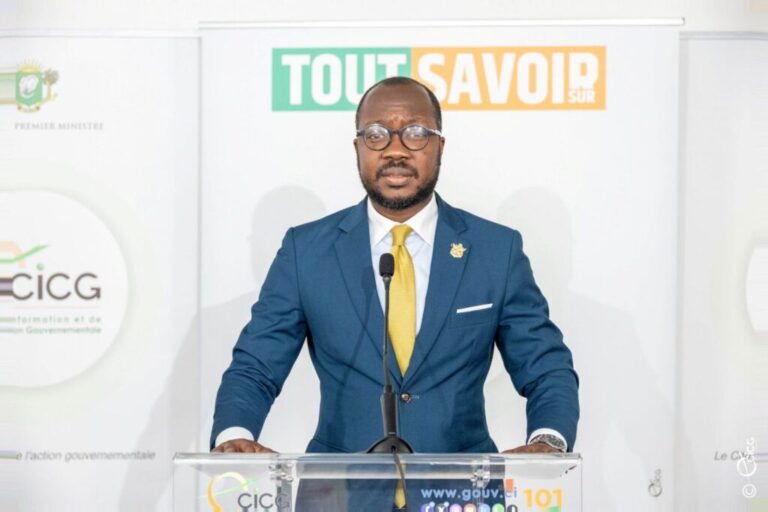
On the occasion of the “Everything about” discussion forum, organised last Tuesday by the Government Information and Communication Centre (Cicg), Christian Bohouman, director of communication and documentation at the Ministry of Tourism and Leisure, gave a particularly laudatory assessment of the impact of the “Sublime Côte d’Ivoire” national plan.
The key figures presented during this forum demonstrate the renewed vitality of the tourism sector. Tourism now contributes 8.7% to the gross domestic product (GDP) of the Republic of Côte d’Ivoire (RCI).
This dynamic has enabled the creation of more than 560,000 jobs across the country, attracting an annual flow estimated at 6.5 million visitors.
According to the director, this remarkable performance is the direct result of the massive investments made in infrastructure, but also of a strategic weapon: tourist diplomacy.
Olympique de Marseille as an international showcase
To illustrate the deployment of this diplomacy of influence, Christian Bohouman highlighted the recent visit of a delegation from the Olympique de Marseille football club, present in Ivory Coast from July 15 to 18. This international partnership represents one of the five pillars of the ministerial strategy to promote the Ivory Coast
destination.
“This exceptional visibility has made it possible to highlight the best that our country offers: the quality of its infrastructure, particularly sports, the diversity of its tourist sites, the richness of its cultural heritage, as well as the hospitality, warmth and enthusiasm which characterize the Ivorian people,” rejoiced the representative of the ministry.
Beyond the immediate financial impact, the government is looking at the long term. Tourism diplomacy is seen as a real instrument of geopolitical and cultural influence, a “soft power” intended to establish the credibility of the country on the world stage.
“It is not measured only by the number of visitors welcomed,” recalled Mr. Bohouman, adding that “it is also measured by the quality of the partnerships concluded, the investments attracted, the trust that we inspire, the notoriety that we build and the place that our country gradually occupies in the imagination of travellers around the world.”
Tourism at the heart of Ivorian soft power
To support this ambition, Ivory Coast is deploying a multidimensional offensive through its presence in major international trade fairs, the launch of large-scale digital campaigns, and the strategic establishment of representative offices abroad.
The country currently has 11 operational tourism offices around the world, strategically distributed across Africa (Morocco, South Africa, Nigeria), Europe (France, Italy, Spain), America (United States, Canada, Brazil) as well as Asia and the Middle East (China, Qatar).
The mission of these branches is to ensure continuous promotion of the destination, while forging close links with tour operators, airlines, specialised media and potential investors. By actively participating in major global meetings in the sector, Ivory Coast intends to consolidate its positioning and capture new market shares.
By transforming tourism into a lever of economic diplomacy, Ivory Coast is not only seeking to fill its hotels, but to assert its regional and international leadership.
“Tourism is not just an economic sector; it has become an instrument of influence, a lever of economic diplomacy and a powerful vector of our country’s international influence,” concluded Christian Bohouman, recalling the institution’s responsibility to build a destination that is ever more competitive, innovative and open to the world.
AP/Sf/fss/as/APA