



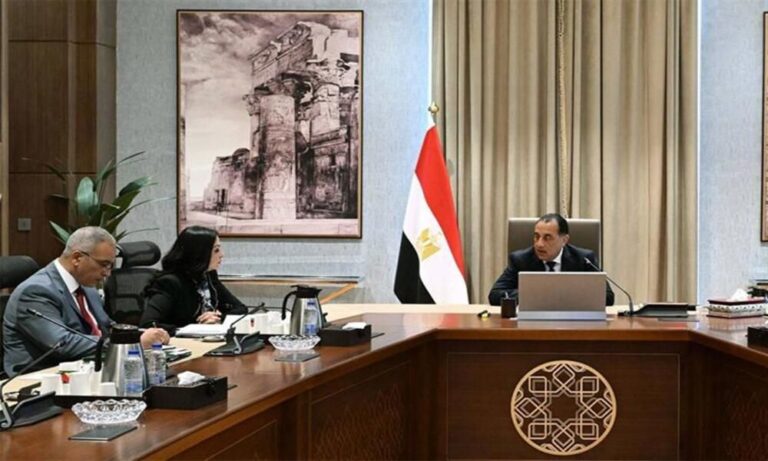
The Egyptian government is working to create a unified social protection system designed to gradually replace some in-kind subsidies with direct financial assistance, as part of a reform aimed at improving the targeting of vulnerable households and strengthening fiscal sustainability.
Egyptian Prime Minister Mostafa Madbouly indicated on Monday that the authorities are preparing an integrated program based on cash transfers differentiated according to the income and social
circumstances of the beneficiaries, according to a statement from the Council of Ministers.
This reform comes as Egypt seeks to streamline its public spending while maintaining support mechanisms for those most exposed to inflation and the rising cost of living. The future system is intended to gradually replace several forms of in-kind subsidies currently in place, particularly for food and certain energy products.
However, the government has not yet specified the implementation timeline or the exact scope of the assistance to be affected by this transformation.
Egyptian authorities present this program as a “dynamic” system allowing beneficiaries to enter or exit the program based on changes in their income and living conditions.
The stated objective is to make social assistance mechanisms more precise and transparent through the use of updated and verified databases.
Mostafa Madbouly believes this reform should strike a balance between social justice and economic sustainability. The government is particularly focused on reducing inefficiencies associated with
widespread subsidy systems while preserving the purchasing power of the most vulnerable populations.
Egypt already has several large-scale social programs. The most significant remains “Takaful and Karama” (“Solidarity and Dignity”), launched in 2016 with World Bank support to provide financial
assistance to low-income families, the elderly, and vulnerable populations.
The “Tamween” ration card system also allows tens of millions of Egyptians to purchase basic necessities at subsidised prices.
The country also maintains several indirect support mechanisms, including subsidies for baladi bread, a staple food in the national diet, as well as fuel subsidies for bakeries and butane gas cylinders.
The authorities have not yet indicated whether these measures will be fully integrated into the future monetary system.
MK/AK/Sf/fss/as/APA