





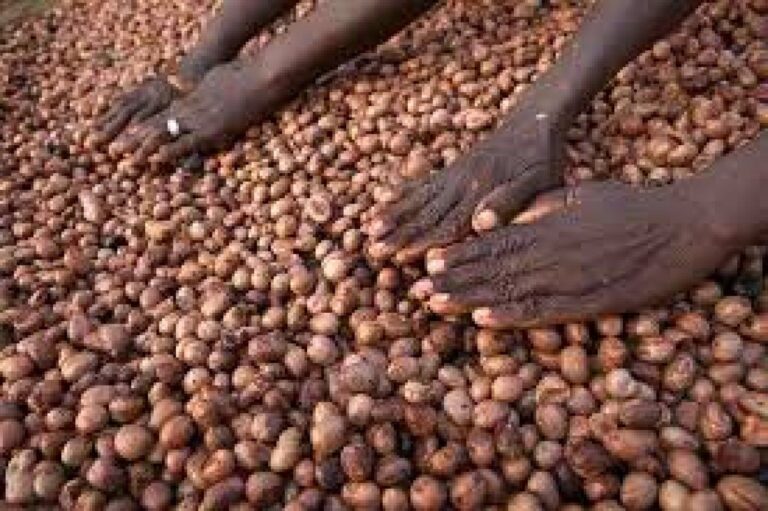
Ghana has launched a Sheapark Resource Hub Project in Wa, in the Upper West Region of Ghana over the weekend.
Launching the project on Saturday, President John Mahama said the Upper West Sheapark Resource Hub stemmed from a deliberate policy choice by his government to reset Ghana’s development trajectory.
He said by unlocking regional strengths, and ensuring that no part of the country is left behind in the Reset Agenda, the project will impact local shea value chain in the region and vindicate the narrative that national development must grow from the regions outward, not necessarily from the centre alone.
“It is part of a broader regional transformation agenda that aligns fully with our flagship national priorities in the Reset Agenda, the Big Push, and the 24-Hour Economy Initiative,” he said.
President Mahama noted that the shea sector occupies a unique and strategic place in Ghana’s rural economy, particularly in the country’s savannah belts. He said across the Upper West Region and other regions of the north, shea trees are not merely economic assets but part of the cultural identity and ecological heritage.
Mr Mahama lamented that although for generations women have sustained households and communities through shea picking and processing, they have remain trapped in poverty despite Ghana’s position as one of the world’s leading producers of shea nuts.
According to him, it was time women were lifted from the lowest end of the value chain.
“This hub is envisioned as a world-class, phased agro-industrial ecosystem designed around sustainability, innovation, and inclusion, and it will bring together modern shea processing facilities for cosmetic production, for food, for nutraceuticals, and for pharmaceutical markets,” Mahama said.
He also said the hub brings under one umbrella quality control laboratories; training and capacity-building centres; storage, logistics, and warehousing; direct market access; solar-powered energy solutions; water treatment and recycling plants; business incubation; cooperative aggregation; and export facilitation.
He said at full maturity, the sheapark ecosystem is expected to empower over 7,000 women in the Upper West and support thousands of youth jobs.
According to him, the project will anchor value chains not only for shea but also for associated products such as groundnuts, soybeans, sorghum, dawadawa, cotton, and honey.
WN/as/APA