





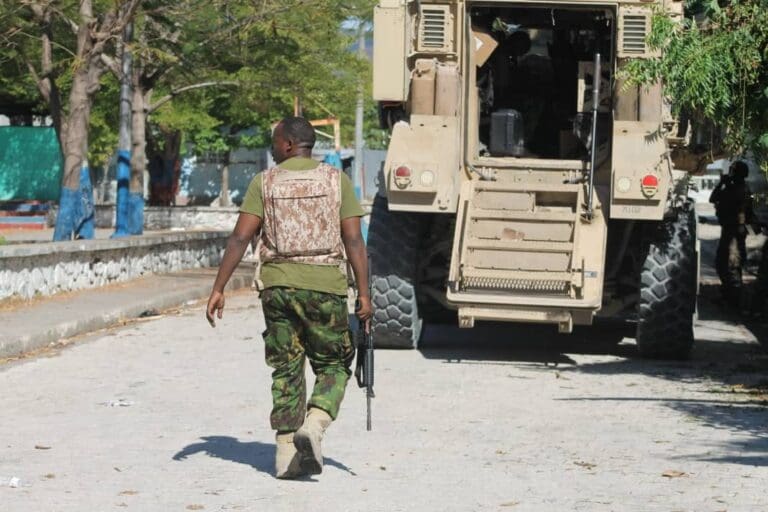
In February the Haitian Times reported the first casualty of the Kenyan contingent of a UN-sponsored peacekeeping mission in the Caribbean nation.
Less than one month into the mission, a Kenyan police officer was shot and wounded in the shoulder while patrolling in Port-au-Prince in July 2024. The unnamed officer who apparently survived the shooting from gangs infesting the Haitian capital was part of a patrolling team responding with fire to a looting spree by a gang who had apparently killed a truck driver and commandeered goods on his vehicle.
Seven months later, his 31-year-old police compatriot Samuel Tompei Kaetuai was not so lucky. He was mowed down and died from gunshot wounds during armed confrontations with gang members in Savien, leaving Kenyans at home digesting the stark news with shock and trepidation.
“This is the price our brave officer paid—he was killed fighting for the Haitian people,” said MSS spokesman Jack Ombaka.
But nine months into their deployment in Haiti, the mission is failing to catch on with the Kenyan populace. Many Kenyans jittery about the subject say enough is enough. They are not in the mood to countenance any more Kenyan police paying the ultimate price to resolve a foreign quagmire which is far removed from domestic challenges at home.
Thus there is a growing clamour for the MSS mission aborted and their police contingent flown back to Kenya.
The Multinational Security Support (MSS) Mission is an international police and military force created through a resolution by the United Nations Security Council in 2023 to help with the restoration of law and order in Haiti, a country which has been under the vicious grip of gang warfare against the Haitian security forces since 2018.
The US State Department is committing $100 million in assistance while the Department of Defense offers the same amount in other aspects of the mission.
Since October last year over 70 people had been killed directly from gang-related violence and there are running street battles with the Haitian police and their helpers from the MSS who have been treated as fair game by gang members who have rendered the capital Port-au-Prince ungovernable.
Many Kenyans appear to have lost faith in the mission even before it got going for Kenya’s over 600 personnel making up the MSS, which was expected to be beefed up by other police contingents from Belize and the Caribbean Community members of Barbados, The Bahamas, Jamaica, Guyana Antigua and Barbuda. In January Guatemala and El Salvador contributed troops which were transported by a U.S military aircraft.
With the violence unabated, Kenyans believe it’s already a lost cause to save the people of a fellow black-majority country outside of their continent.
The gangs themselves had made their position about the deployment of foreign forces in their country unequivocally clear. They will regard them as an ‘interfering force’ in the internal affairs of their country where they should have no role.
Complemented by the Kenya-led mission, Haitian security forces have been battling notable gangs such as the Gran Grif and Kokorat San Ras who armed to the teeth are notorious for visiting terror on residents in and around communities where they are based.
There is little indication that the mission was making some progress on the ground where the security situation is hanging in a state of flux as armed gang ran amuck with impunity while in control of 90 percent of the capital.
Even as President William Ruto lived by his government’s pledge to commit more police in Haiti during the intervening months of the new year, the Kenyan leader did not hold back from criticising the MSS for its supposed lack of proper organisation which speaks to the “lack of equipment, logistics, and funds.” This was in addition to abiding concerns that the mission’s operational framework and rules of engagement are unclear. However, there is no waning interest from the government which earlier this month announced allocating Ksh 2.5 billion to support the mission. This comes amid a Trump-ordered freeze by the US which will not affect its funding of the mission.
According to the Haitian Times, Haiti’s restless populace is growing increasingly skeptical of the ability of the police force and the multinational mission to rein in the gangs who appear emboldened by the security forces own indecisiveness.
In late February, the Haitian police suffered six casualties which included four fatalities in a series of skirmishes with gangs in the communes of Kenscoff and Montrouis and in the Fort National, Nazon, Delmas 17 and 30 and Savien districts of the capital.
The Haitian Armed Forces (FADH) and agents of the Protected Air Brigade (BSAP) also reported casualties.
The United States which is the main funder of the MSS with had sent armored vehicles to strengthen the patrols but this has not brought a dent in the potency of the gangs.
Meanwhile the body of the lone Kenyan police killed in the line of duty in Haiti arrived in Nairobi on March 10th to be greeted by a solemn ceremony led by the Deputy Inspector General of the Administration Police Service, Mr. Gilbert Masengeli.