



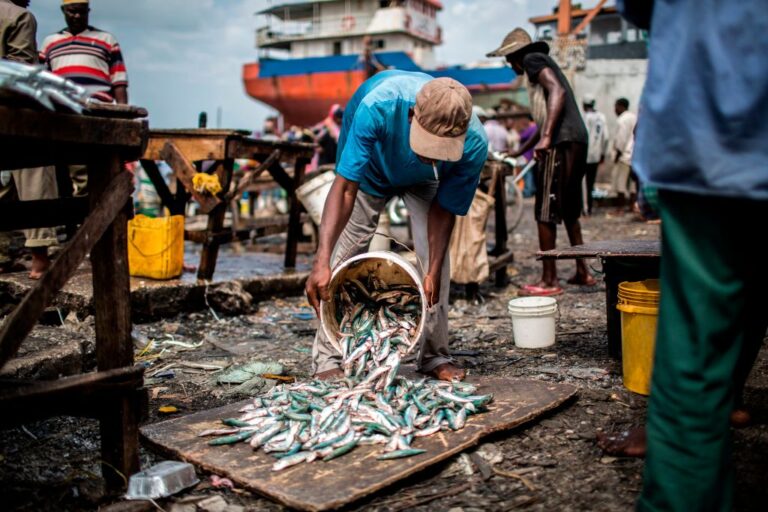
Member states of the Intergovernmental Authority on Development (IGAD) have raised alarm over ongoing Illegal, unreported and unregulated fishing which continues to threaten aquatic biodiversity and marine ecosystems across the region.
Representatives of the member states during a relevant workshop in Mombasa, coastal city of Kenya, on Friday made the alarm, calling for an intensified efforts and increased funding and coordinated regional operations to combat illegal fishing in the region.
The African Union Inter-African Bureau for Animal Resources (AU-IBAR), in collaboration with the Intergovernmental Authority on Development (IGAD), convened the three-day expert training workshop aimed at strengthening regional capacity in Monitoring, Control and Surveillance (MCS) systems to combat IUU fishing and safeguard aquatic biodiversity and the environment.
The representatives said Illegal, unregulated, and unreported (IUU) fishing poses a major threat to effective management of marine resources, affecting biodiversity and communities dependent on these coastal resources.
Kenya Fisheries Service Acting Director in Charge of Capture Fisheries, Jared Agano, said during a field tour by delegates at the Liwatoni MCS Centre in Mombasa that effective MCS systems are critical to securing sustainable fisheries and effectively tackling illegal fishing.
He underscored the need for stronger regional collaboration to address aquatic threats facing member states.
“We need to conduct regional patrols, and that will require member states to review their national laws and policies so that we can harmonise legislation to enable IGAD member states to carry out regular MCS patrols in the region,” said the Acting Director.
He further proposed that member states develop a sustainable funding model to facilitate regular patrols and surveillance operations aimed at eradicating illegal fishing.
“It is also very important to look into a viable funding model because patrols, especially offshore patrols, are very expensive and require adequate resources,” he added.
Sarah Nakaziba, Principal Fisheries Officer at Mayuge District Local Government in Uganda, said the training came at an opportune time. She praised Kenya’s effective MCS systems and called for donor support to strengthen surveillance efforts on Lake Victoria.
“Kenya is moving very fast as far as MCS is concerned. They are already using technology that we have not yet adopted in Uganda. However, we now have the Fisheries and Aquaculture Act of 2023, which was passed by the President, and it provides for the use of technology in conducting monitoring, control and surveillance,” said Nakaziba.
She explained that the new law has facilitated a shift from reliance on the military, with the establishment of the Fisheries Protection Unit (FPU) to oversee surveillance operations.
“The Act now provides for a specialized civilian MCS unit, although members will undergo paramilitary training. It will be inter-agency and involve different institutions,” she stated, adding that the unit has contributed to the revival of Nile perch stocks.
MG/as/APA